

The Brief
The Brief
The Brief
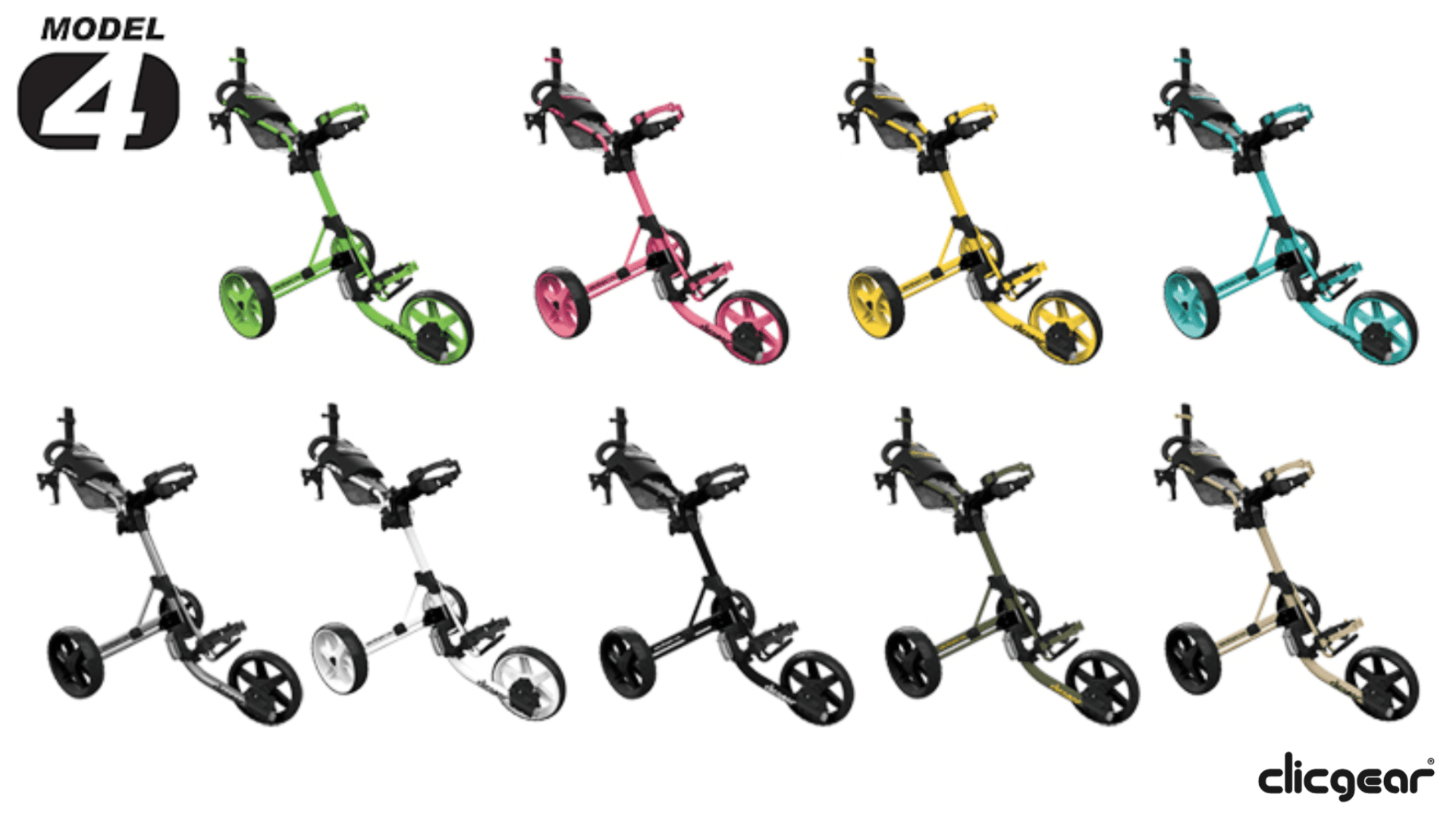
Clicgear’s Model 4 cart offered 9 bold and heavily saturated colorways that had limited universal appeal.
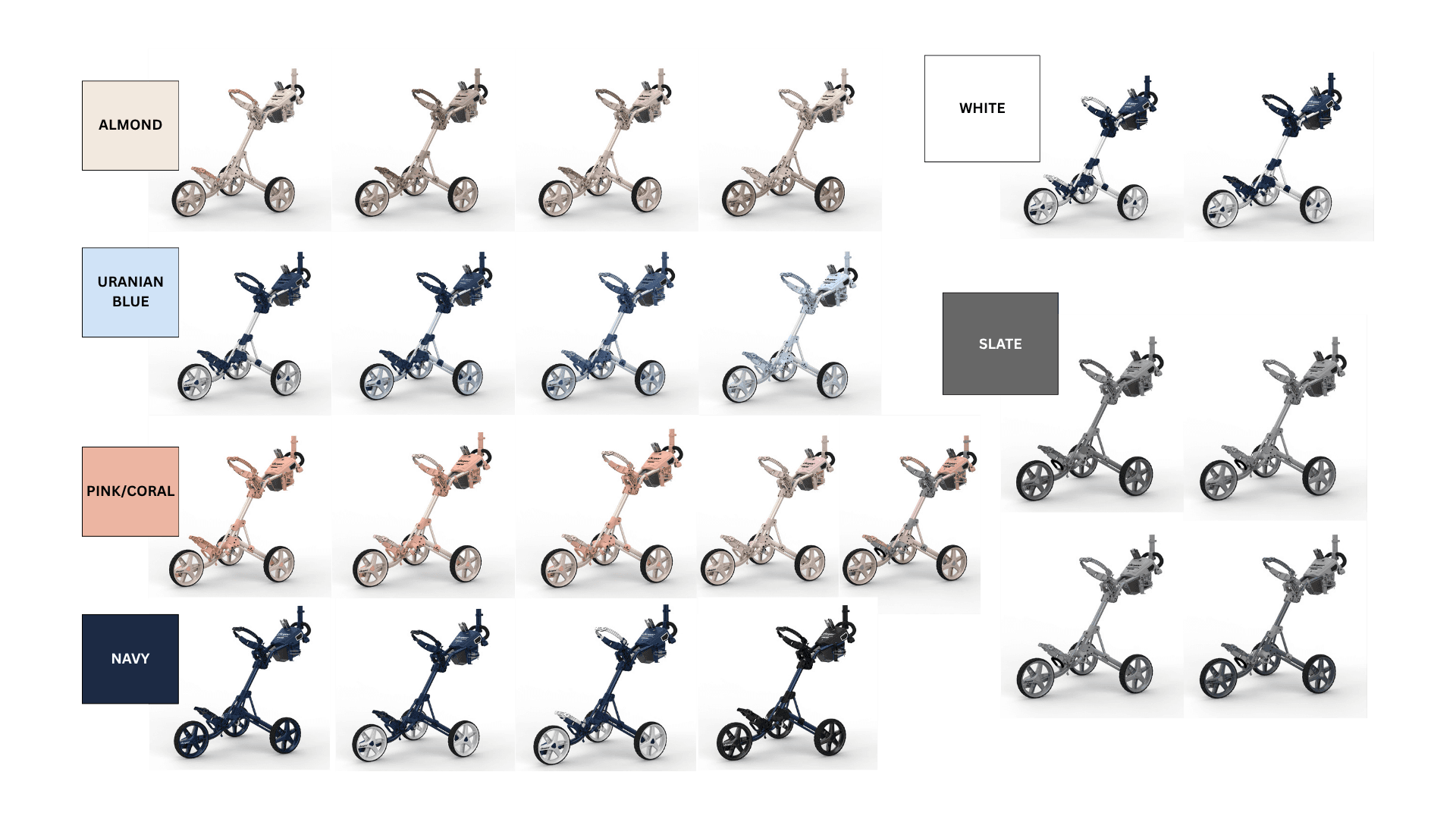
For the Model 4.5 cart, the goal was to develop a refined evergreen palette that could resonate across all consumers, moving away from aggressive sporting tones or overtly gendered options. The priority was a collection of timeless colors that would survive the cart’s lifespan. The palette would need to feel as relevant 10 years later as it did on launch day.
Clicgear’s Model 4 cart offered 9 bold and heavily saturated colorways that had limited universal appeal.
For the Model 4.5 cart, the goal was to develop a refined evergreen palette that could resonate across all consumers, moving away from aggressive sporting tones or overtly gendered options. The priority was a collection of timeless colors that would survive the cart’s lifespan. The palette would need to feel as relevant 10 years later as it did on launch day.
Clicgear’s Model 4 cart offered 9 bold and heavily saturated colorways that had limited universal appeal.
For the Model 4.5 cart, the goal was to develop a refined evergreen palette that could resonate across all consumers, moving away from aggressive sporting tones or overtly gendered options. The priority was a collection of timeless colors that would survive the cart’s lifespan. The palette would need to feel as relevant 10 years later as it did on launch day.
Market Trend Analysis
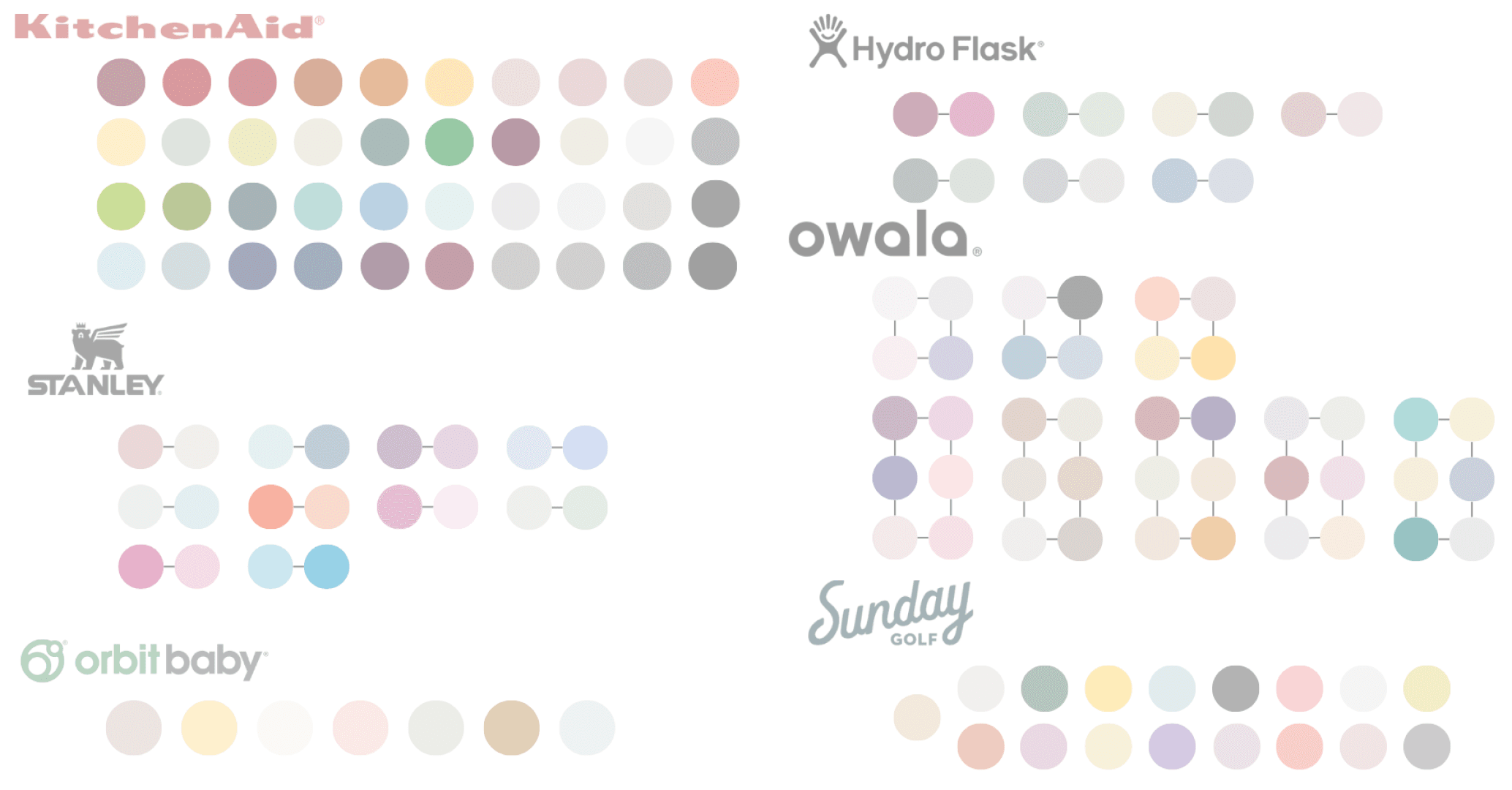
To understand how leading consumer brands approach color strategy, I conducted a study across six brands in adjacent categories -- golf, drinkware, baby supplies, and kitchen appliances -- where color is a primary decision point before purchase.
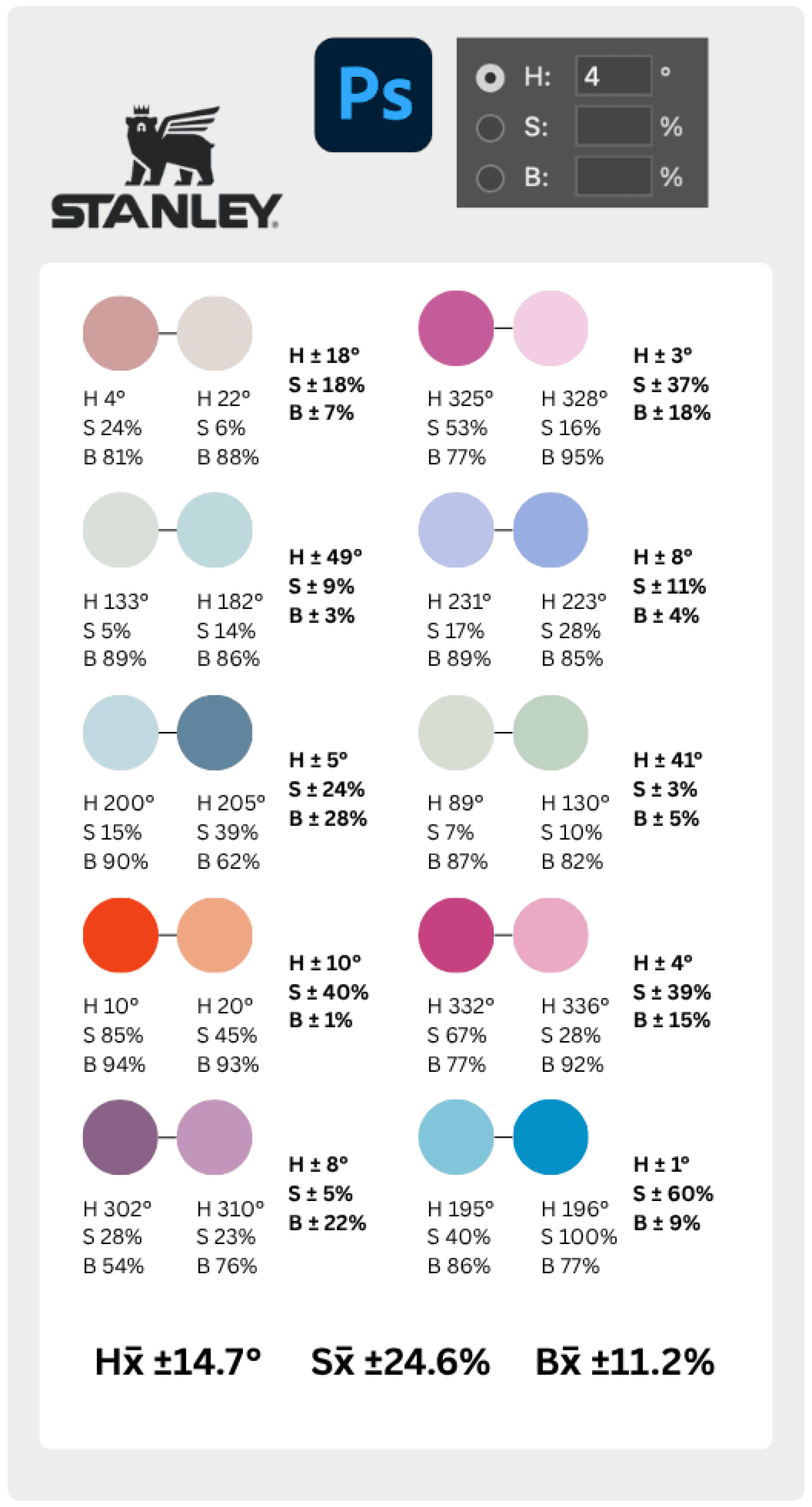
Using Photoshop’s HSB model, I analyzed each brand’s palette by breaking colors down into three measurable properties: hue, saturation, and brightness. Using Stanley -- a brand widely recognized for its successful color-driven expansion into new consumer markets -- as a primary benchmark, I mapped the variance between colorways to identify a patter between primary and secondary tones.
This approach gave the Model 4.5 colorway development process a data-informed foundation, rather than a purely instinctive one.
Market Trend Analysis
To understand how leading consumer brands approach color strategy, I conducted a study across six brands in adjacent categories -- golf, drinkware, baby supplies, and kitchen appliances -- where color is a primary decision point before purchase.
Using Photoshop’s HSB model, I analyzed each brand’s palette by breaking colors down into three measurable properties: hue, saturation, and brightness. Using Stanley -- a brand widely recognized for its successful color-driven expansion into new consumer markets -- as a primary benchmark, I mapped the variance between colorways to identify a patter between primary and secondary tones.
This approach gave the Model 4.5 colorway development process a data-informed foundation, rather than a purely instinctive one.
Final Palette
Final Palette
Final Palette
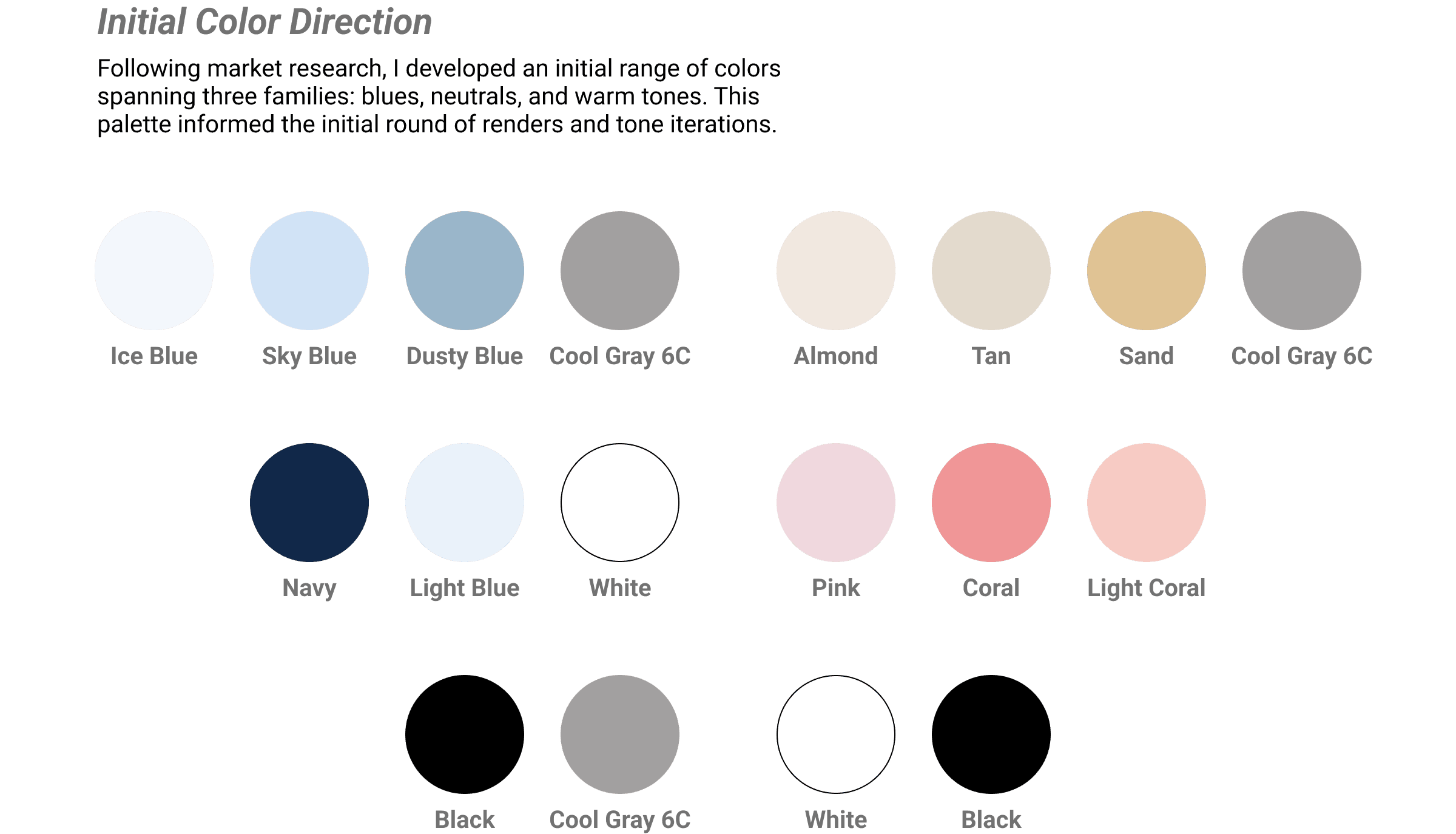
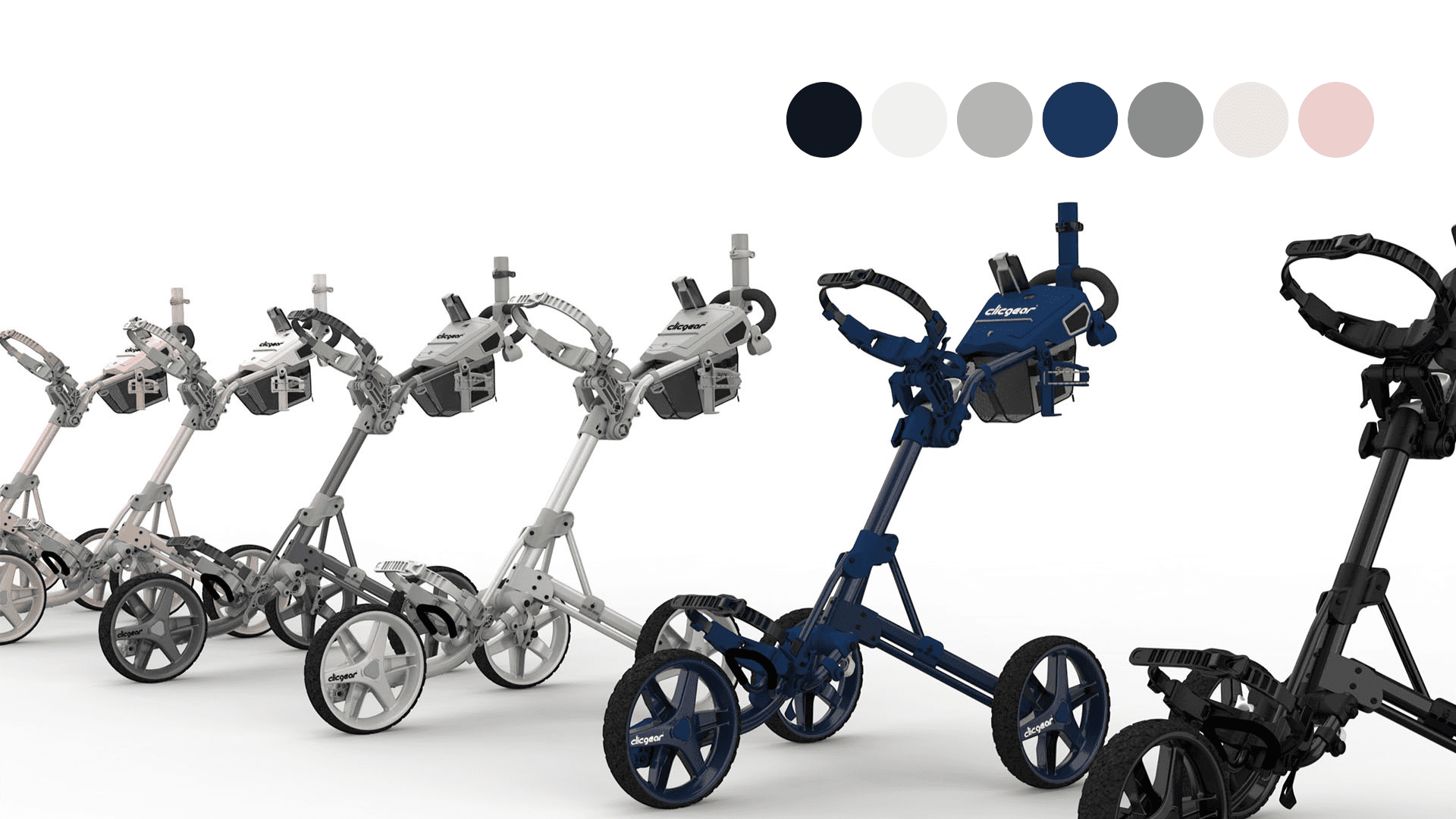
After rounds of iteration and refinement, the team and I finalized a 6-color evergreen lineup with full Pantone specs. Each color was selected for its timelessness and cross-market appeal, grounded in previous research findings.
After rounds of iteration and refinement, the team and I finalized a 6-color evergreen lineup with full Pantone specs. Each color was selected for its timelessness and cross-market appeal, grounded in previous research findings.
After rounds of iteration and refinement, the team and I finalized a 6-color evergreen lineup with full Pantone specs. Each color was selected for its timelessness and cross-market appeal, grounded in previous research findings.
Packaging Design
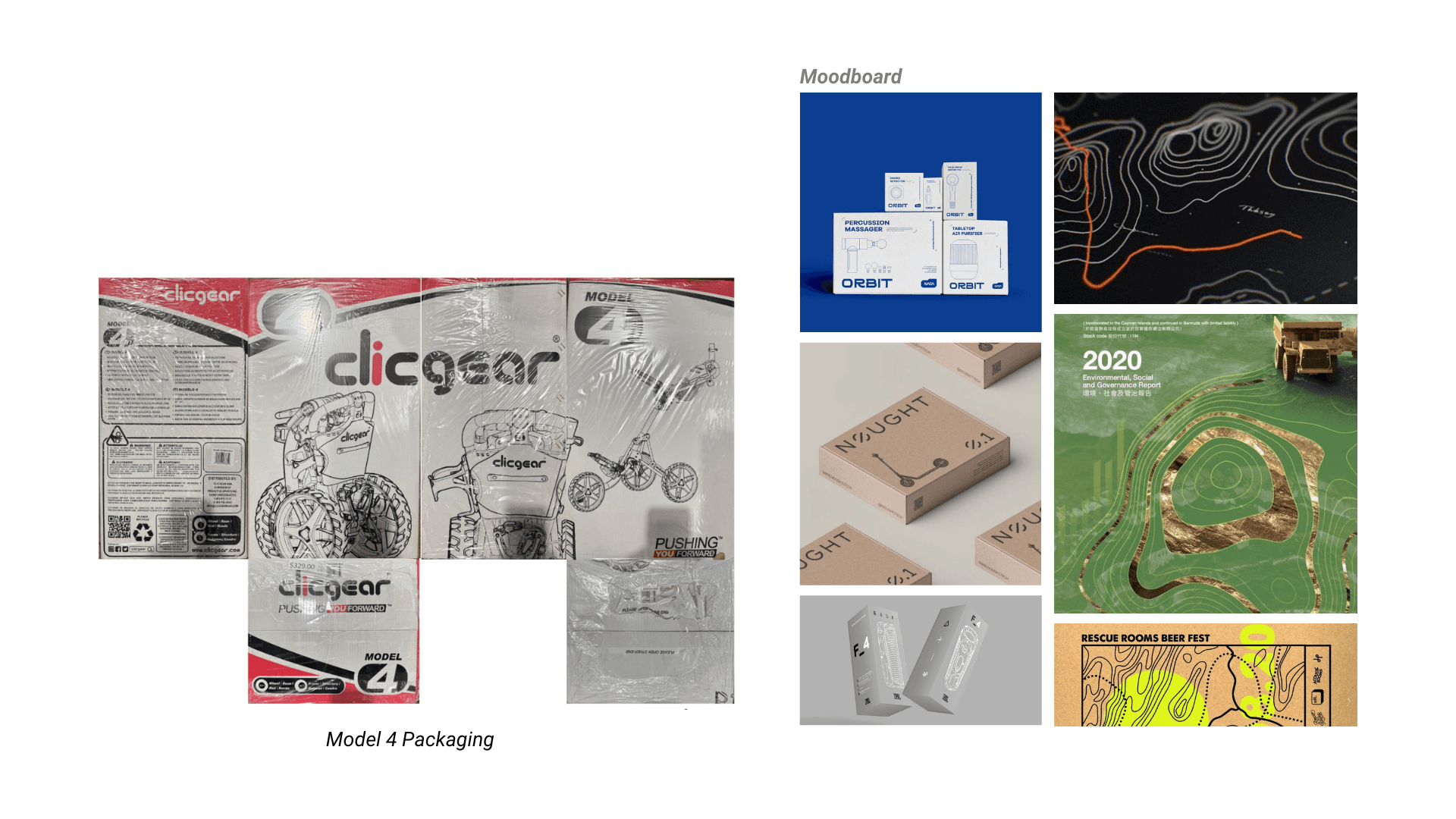
With color direction established, my work expanded to a packaging redesign. The existing Model 4 box relied on bold red features and technical line art, which was a departure from the elevated, cross-market direction the brand was pursuing. Drawing from premium references across multiple categories, a new visual language began to take shape.
Packaging Design
With color direction established, my work expanded to a packaging redesign. The existing Model 4 box relied on bold red features and technical line art, which was a departure from the elevated, cross-market direction the brand was pursuing. Drawing from premium references across multiple categories, a new visual language began to take shape.
Design Exploration
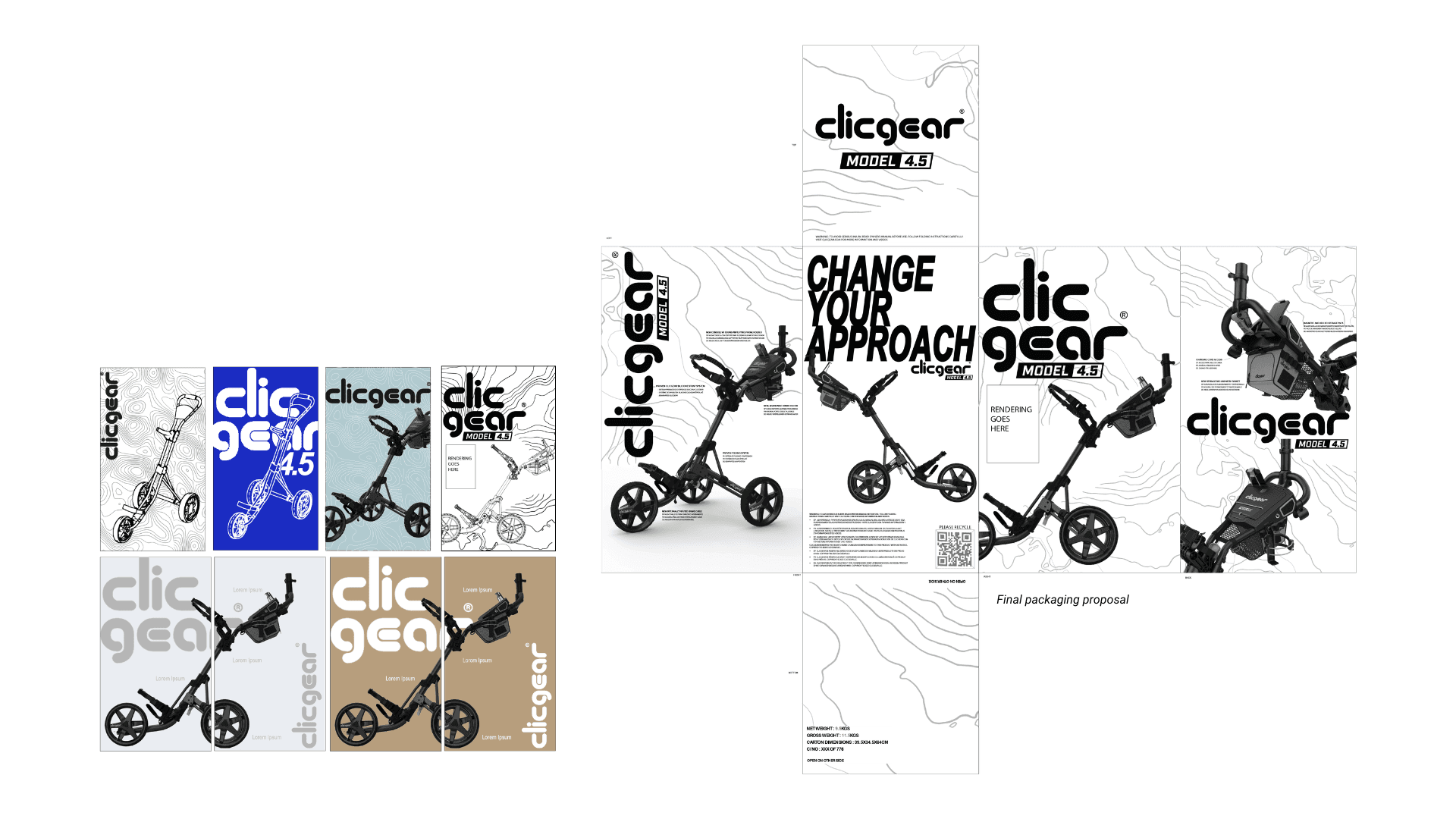
Using AI mockup tools and traditional software, I explored a variety of concepts across a range of colorways and layouts. Working closely with the team, we aligned on an approach that would inform the final direction.
Design Exploration
Using AI mockup tools and traditional software, I explored a variety of concepts across a range of colorways and layouts. Working closely with the team, we aligned on an approach that would inform the final direction.
Packaging Design
With color direction established, my work expanded to a packaging redesign. The existing Model 4 box relied on bold red features and technical line art, which was a departure from the elevated, cross-market direction the brand was pursuing. Drawing from premium references across multiple categories, a new visual language began to take shape.
Outcome
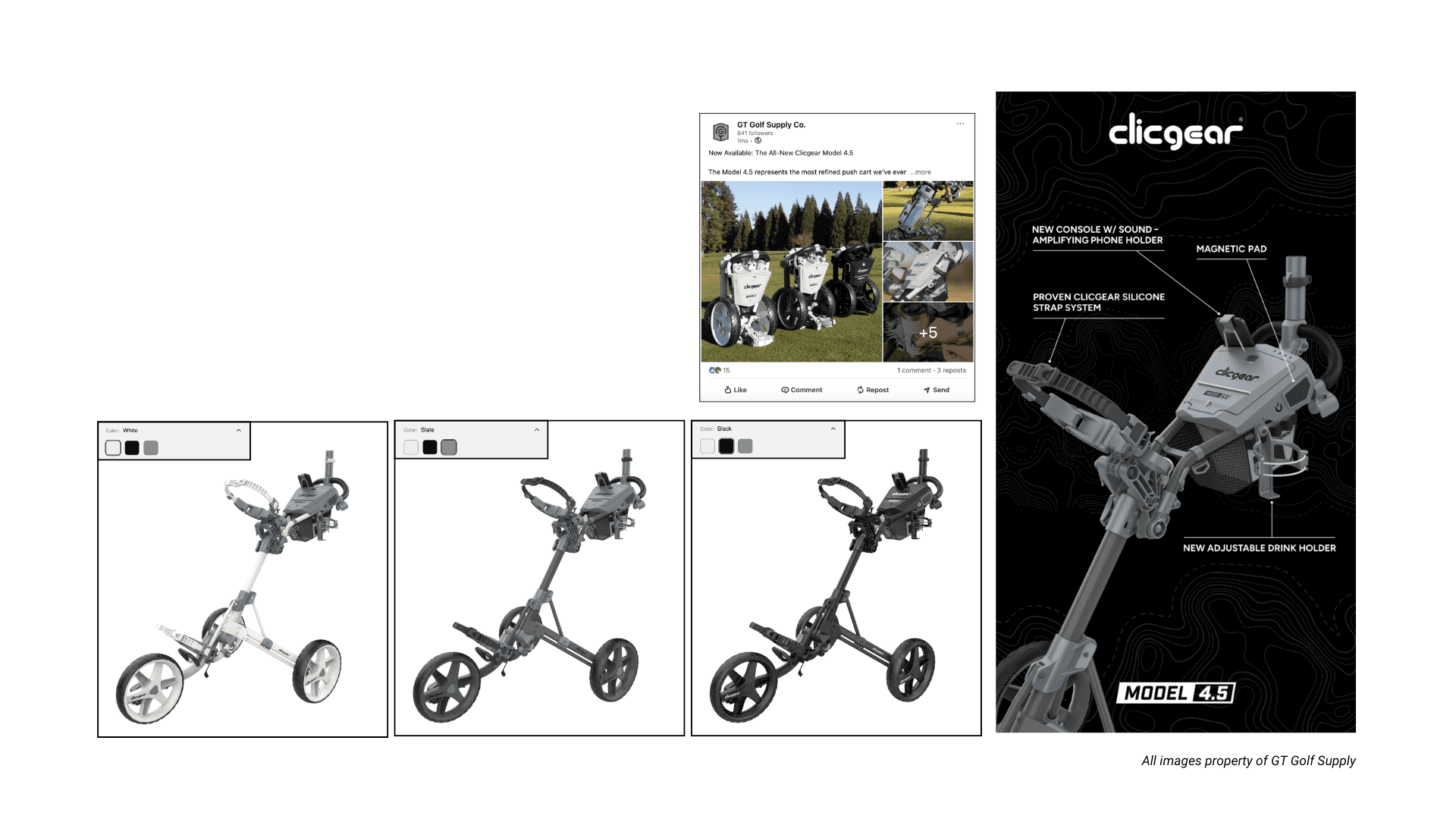
Both project directly contributed to the launch of the Clicgear Model 4.5 pushcart. The color palette developed through market research and iteration resulted in the confirmation of six colorways (Black, White, Slate, Navy, Pink, and Almond) with three currently available on the Clicgear website and online through other distributors like Dick’s Sporting Goods.
The proposed packaging design informed the final box that shipped with the product, with the core concept of topographic line art, high contrast, and bold typography remaining intact.
This internship reinforced the importance of grounding design decisions in research. Working across SKU development and packaging design gave me a comprehensive view of how a product launch comes together, and what it takes to see a concept move fro a brief to an on-shelf product.
Design Exploration
Using AI mockup tools and traditional software, I explored a variety of concepts across a range of colorways and layouts. Working closely with the team, we aligned on an approach that would inform the final direction.
Outcome
Both project directly contributed to the launch of the Clicgear Model 4.5 pushcart. The color palette developed through market research and iteration resulted in the confirmation of six colorways (Black, White, Slate, Navy, Pink, and Almond) with three currently available on the Clicgear website and online through other distributors like Dick’s Sporting Goods.
The proposed packaging design informed the final box that shipped with the product, with the core concept of topographic line art, high contrast, and bold typography remaining intact.
This internship reinforced the importance of grounding design decisions in research. Working across SKU development and packaging design gave me a comprehensive view of how a product launch comes together, and what it takes to see a concept move fro a brief to an on-shelf product.
© 2025 - Sarah McArthur All Rights Reserved
© 2025 - Sarah McArthur All Rights Reserved
© 2025 - Sarah McArthur All Rights Reserved
Outcome
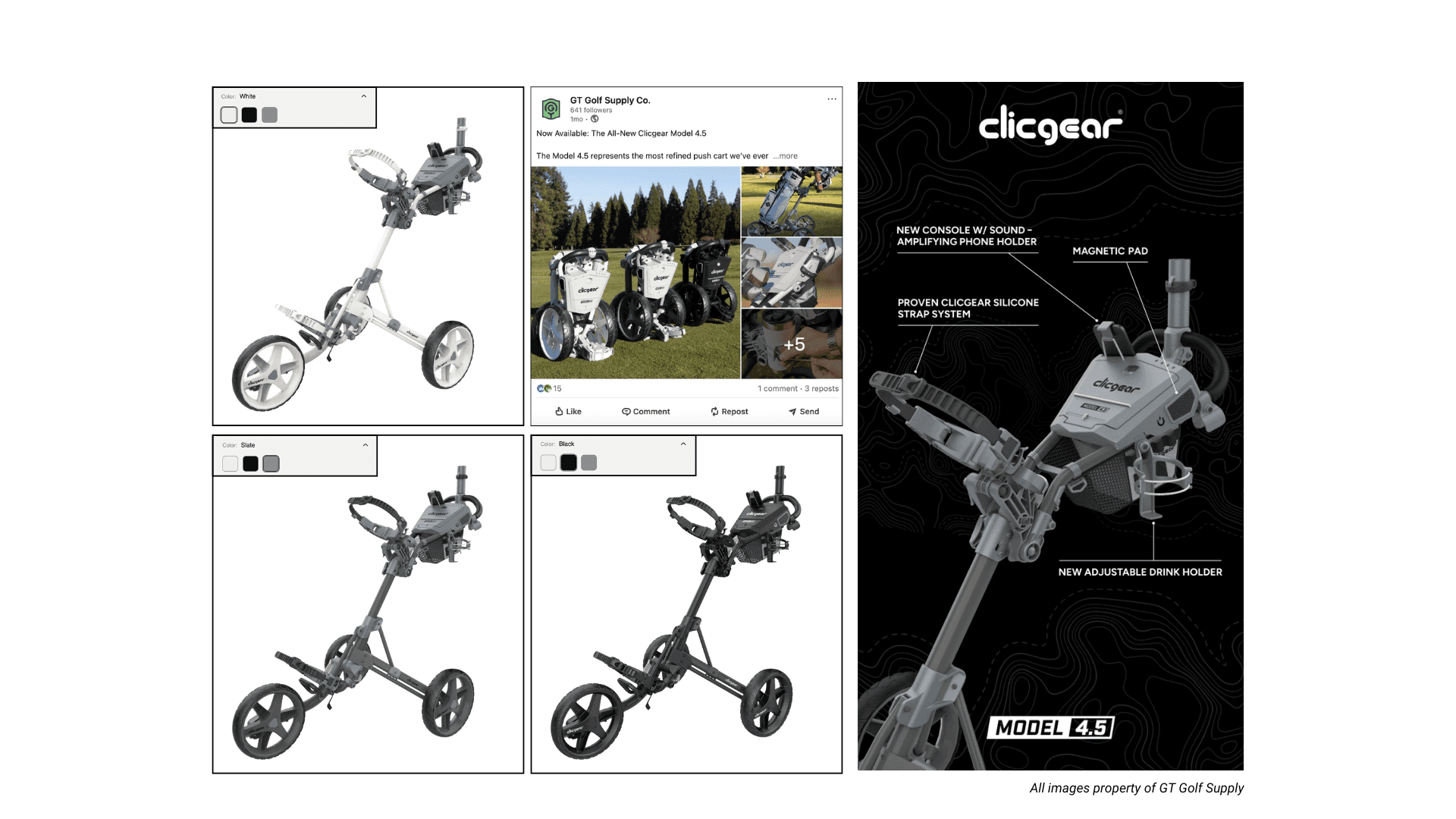
Both project directly contributed to the launch of the Clicgear Model 4.5 pushcart. The color palette developed through market research and iteration resulted in the confirmation of six colorways (Black, White, Slate, Navy, Pink, and Almond) with three currently available on the Clicgear website and online through other distributors like Dick’s Sporting Goods.
The proposed packaging design informed the final box that shipped with the product, with the core concept of topographic line art, high contrast, and bold typography remaining intact.
This internship reinforced the importance of grounding design decisions in research. Working across SKU development and packaging design gave me a comprehensive view of how a product launch comes together, and what it takes to see a concept move fro a brief to an on-shelf product.
Market Trend Analysis
To understand how leading consumer brands approach color strategy, I conducted a study across six brands in adjacent categories -- golf, drinkware, baby supplies, and kitchen appliances -- where color is a primary decision point before purchase.
Using Photoshop’s HSB model, I analyzed each brand’s palette by breaking colors down into three measurable properties: hue, saturation, and brightness. Using Stanley -- a brand widely recognized for its successful color-driven expansion into new consumer markets -- as a primary benchmark, I mapped the variance between colorways to identify a patter between primary and secondary tones.
This approach gave the Model 4.5 colorway development process a data-informed foundation, rather than a purely instinctive one.