
Do you like the Dining Hall?
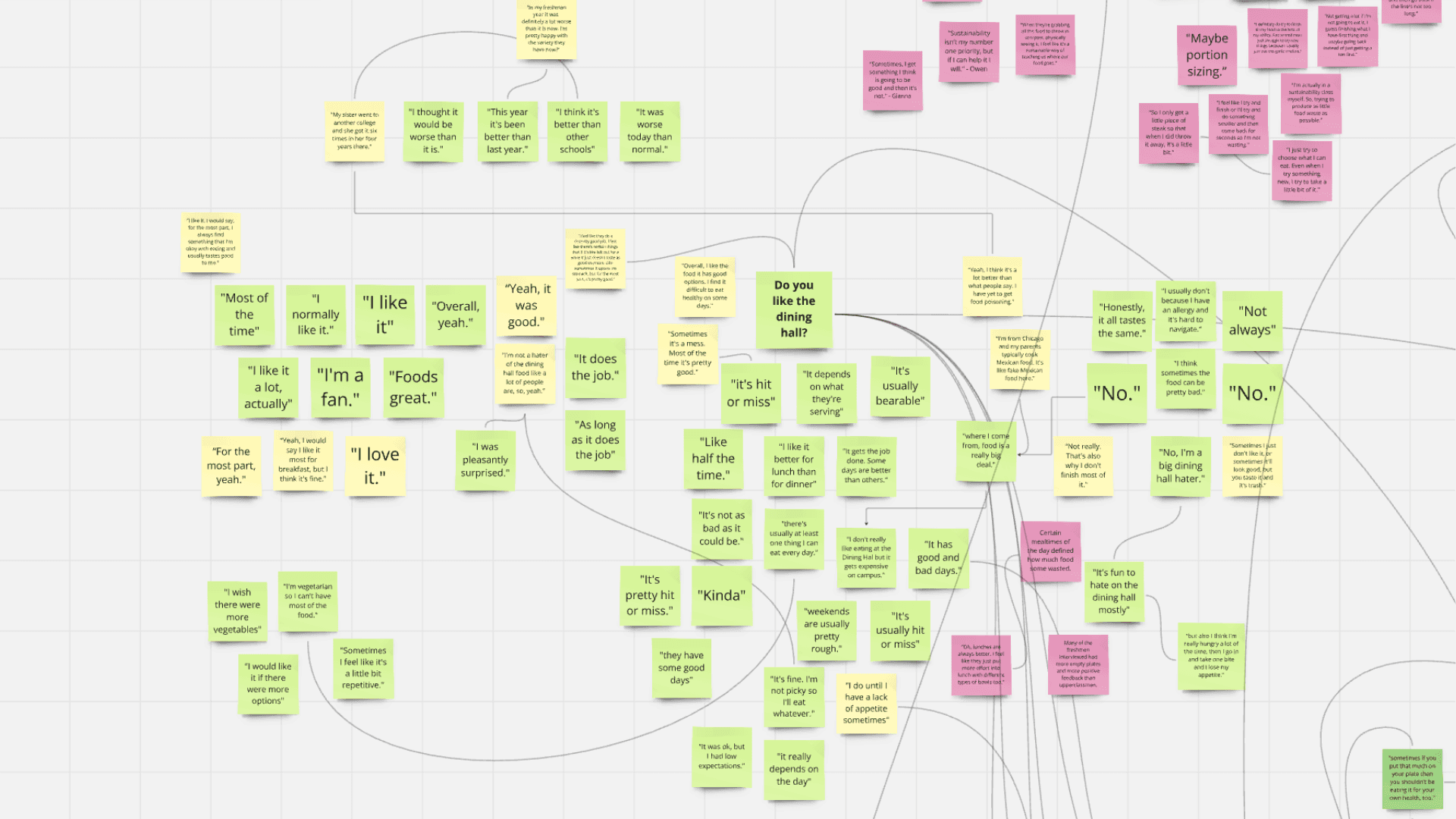
“I would like it if there were more options.”
“I’m a fan!” -- Luke
“I’d say one-third of the time.” -- Lucas
“It’s usually bearable.” -- Yara
“I thought it would be worse than it is.”
-- Caroline
“It all tastes the same.” -- Claire
When students were asked if they liked the dining hall along with their meal, the general attitude was ambiguous.
Do you normally finish all your food?
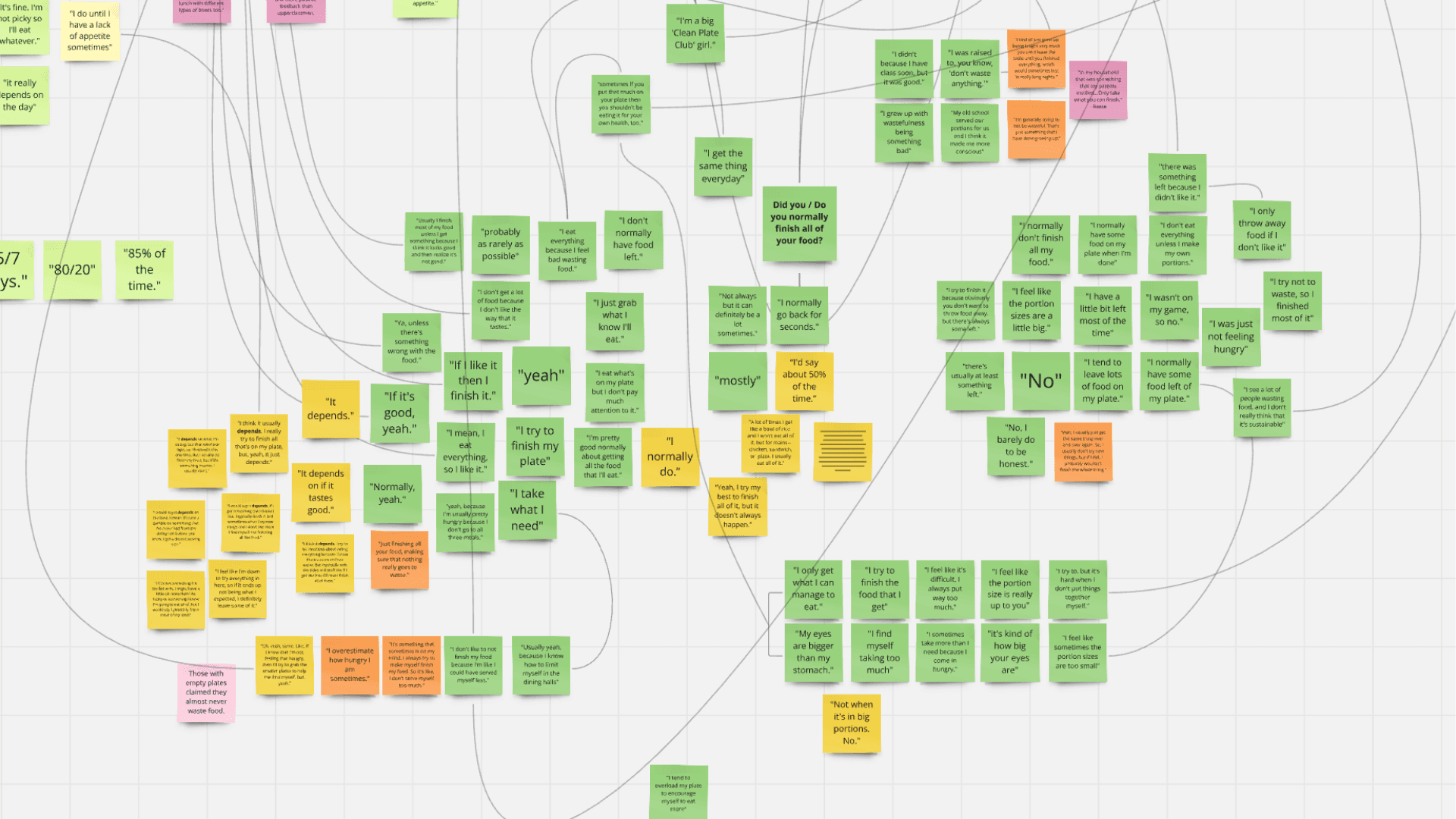
“It depends on if it tastes good.” -- Owen
“If I like it, then I finish it.” -- Corinne
“My eyes are bigger than my stomach.” -- Dan
“Maybe I should portion my food better.” -- Nico
“I was raised to not waste my food.” -- Izzy
“My parents taught me to only take what I could finish, so I try to be careful.” -- Casey
Whether students finish their plate or not is dependent on taste, habits, and background.
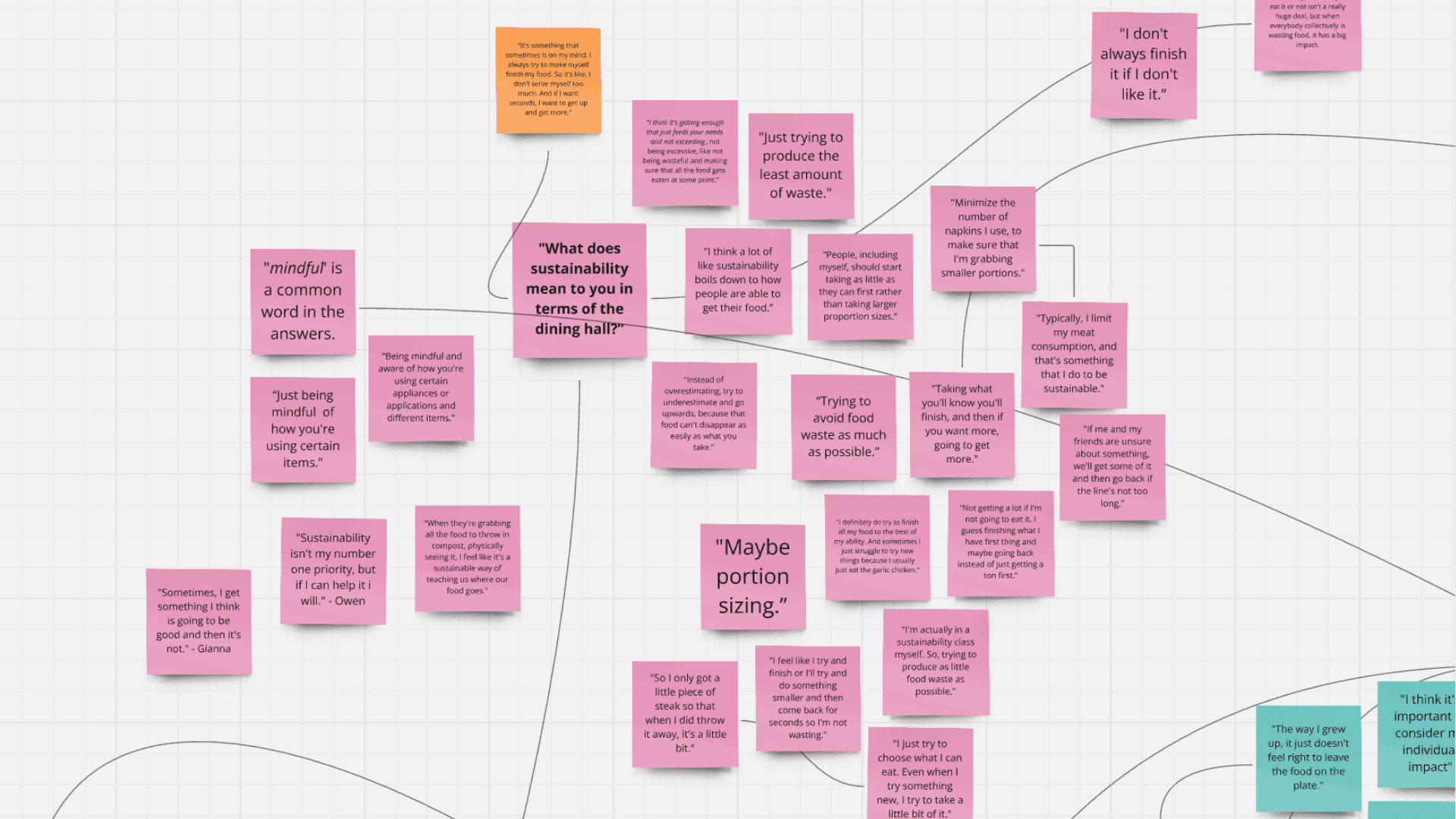
“I try to limit my meat consumption.” -- Maddie
“Just trying to produce the least amount of waste.” -- Gianna
“I’m actually in a sustainability class right now, so I’m trying to produce as little food waste as possible.” -- Owen
“It’s not my number one priority, but if I can help it, I will.” -- Josie
Students are aware of what sustainability is and understand how to bring it into practice.
What does sustainability mean to you?
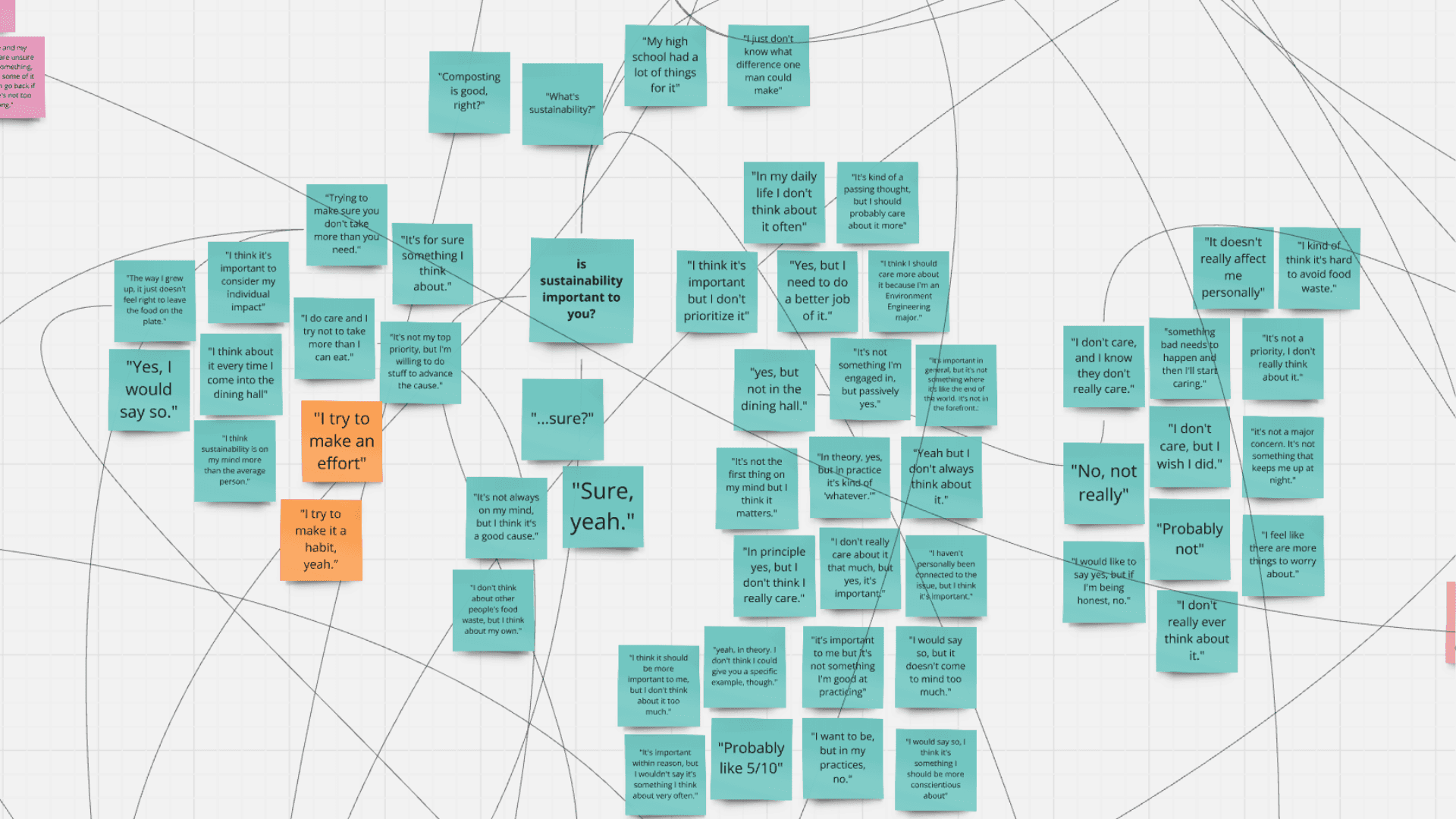
“I don’t really care about it that much, but yes, it’s important.” -- Elise
“It’s important within reason, but it’s not something I think about often.” -- Kate
“Yes, but not in the dining hall... I don’t care, and I know they don’t either.” -- Emma
“I just don’t know what difference one man could make.” -- Will
Despite agreement on the importance of sustainability, students admit to not caring about it personally.
Is sustainability important to you?
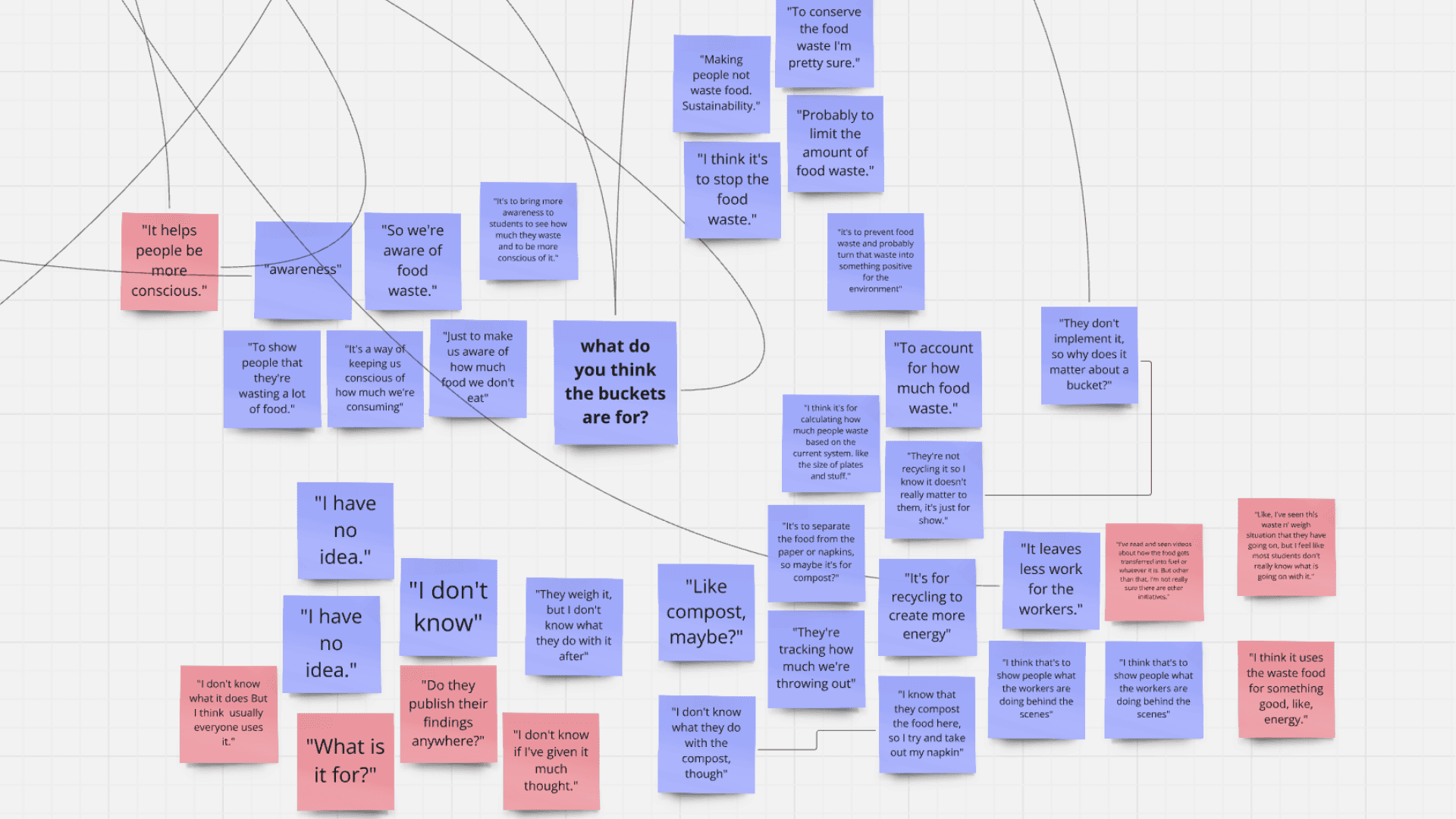
“So we know how much food we’re wasting.” -- Ian
“Do they publish their findings anywhere?” -- Kiki
“I have no idea.’ -- Sean
“To stop the food waste.” -- Ryan
“I think it uses the wasted food for something good like energy.” -- Kate
Students don’t know what the Waste ‘N Weigh is for.
What do you think the Waste ‘N Weigh is for?
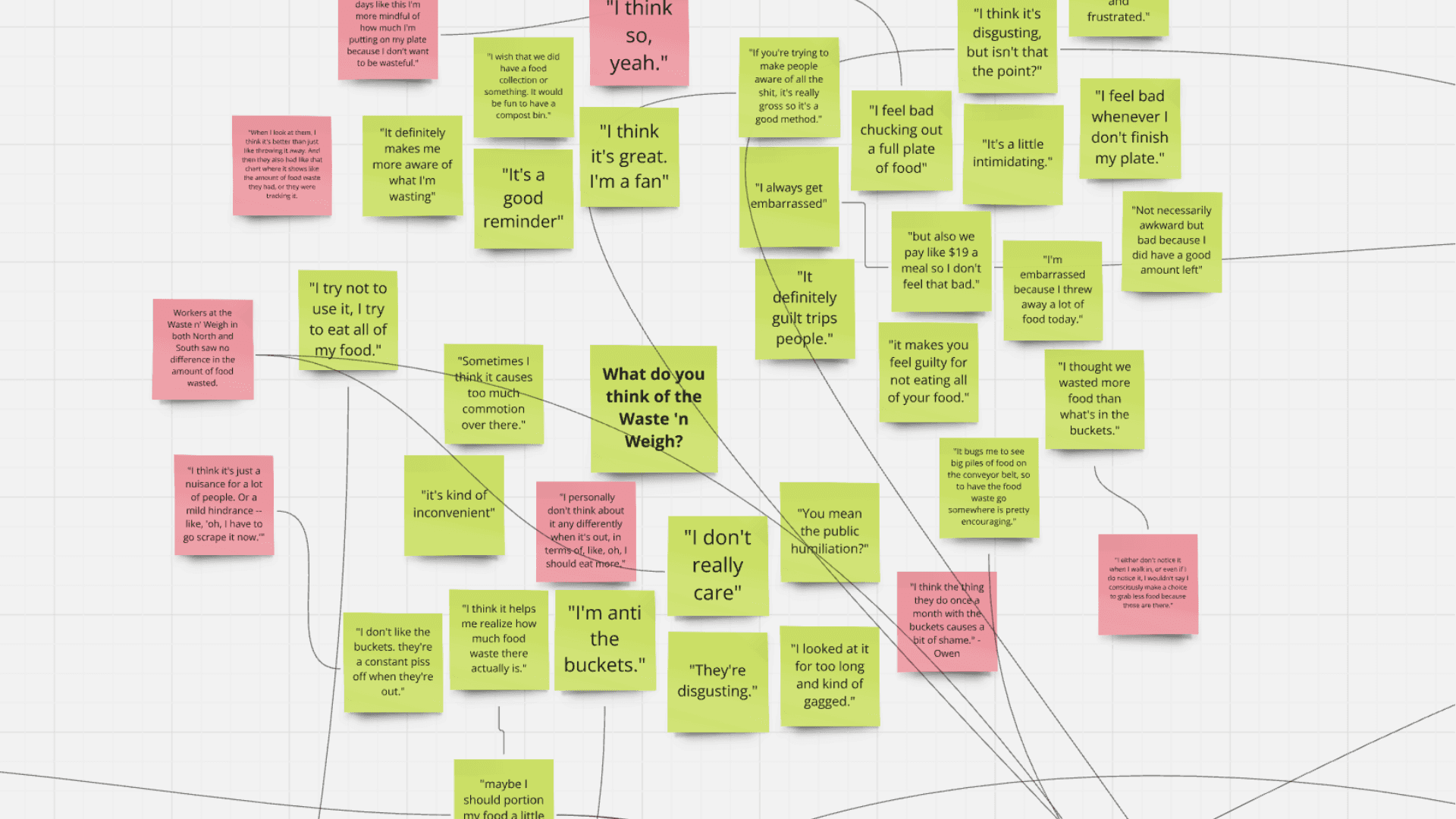
“You mean the public humiliation?” -- Thomas
“I feel bad chucking out a full plate of food.” -- Sam
“I always get embarrassed.” -- Taylor
“It’s a little intimidating.” -- Drew
“I feel bad whenever I don’t finish my plate.” -- Brandon
While some students appreciate the Waste ‘N Weigh, the overall perception of it is negative.
What do you think of the Waste ‘N Weigh?
The Challenge
The Challenge
The Challenge
Despite visible institutional investments in sustainability initiatives, food waste remains a persistent issue within Notre Dame’s dining halls. The University has implemented programs like a monthly Waste ‘N Weigh* aimed to promote awareness and accountability, but limited changes in student behavior does not reflect these efforts. While sustainability is broadly acknowledged as important, it is rarely prioritized in the moment of food selection and disposal.
This gap suggests a deeper behavioral disconnect: institutional intent does not automatically translate into individual action. Students lack clarity around existing initiatives, feel limited personal impact, and often experience emotional friction rather than empowerment. Addressing food waste of campus requires more than awareness -- it demands alignments across systems, communication, and real-time decision making.
Despite visible institutional investments in sustainability initiatives, food waste remains a persistent issue within Notre Dame’s dining halls. The University has implemented programs like a monthly Waste ‘N Weigh* aimed to promote awareness and accountability, but limited changes in student behavior does not reflect these efforts. While sustainability is broadly acknowledged as important, it is rarely prioritized in the moment of food selection and disposal.
This gap suggests a deeper behavioral disconnect: institutional intent does not automatically translate into individual action. Students lack clarity around existing initiatives, feel limited personal impact, and often experience emotional friction rather than empowerment. Addressing food waste of campus requires more than awareness -- it demands alignments across systems, communication, and real-time decision making.
Despite visible institutional investments in sustainability initiatives, food waste remains a persistent issue within Notre Dame’s dining halls. The University has implemented programs like a monthly Waste ‘N Weigh* aimed to promote awareness and accountability, but limited changes in student behavior does not reflect these efforts. While sustainability is broadly acknowledged as important, it is rarely prioritized in the moment of food selection and disposal.
This gap suggests a deeper behavioral disconnect: institutional intent does not automatically translate into individual action. Students lack clarity around existing initiatives, feel limited personal impact, and often experience emotional friction rather than empowerment. Addressing food waste of campus requires more than awareness -- it demands alignments across systems, communication, and real-time decision making.
*The Waste ‘N Weigh is a program implemented in Notre Dame Dining Halls where students discard uneaten food into buckets that staff weigh to understand how much food waste students produce. Results are tracked over time and shared on NDDining’s website.
*The Waste ‘N Weigh is a program implemented in Notre Dame Dining Halls where students discard uneaten food into buckets that staff weigh to understand how much food waste students produce. Results are tracked over time and shared on NDDining’s website.
*The Waste ‘N Weigh is a program implemented in Notre Dame Dining Halls where students discard uneaten food into buckets that staff weigh to understand how much food waste students produce. Results are tracked over time and shared on NDDining’s website.
Goals
Goals
Goals
Gather data on observable patterns in student behavior at the end of their meals.
Understand what drives students to waste food.
Understand how students’ knowledge of sustainability affects their behavior in the dining halls.
Gauge the attitude around sustainability of surveyed students.
Gather data on observable patterns in student behavior at the end of their meals.
Understand what drives students to waste food.
Understand how students’ knowledge of sustainability affects their behavior in the dining halls.
Gauge the attitude around sustainability of surveyed students.
Gather data on observable patterns in student behavior at the end of their meals.
Understand what drives students to waste food.
Understand how students’ knowledge of sustainability affects their behavior in the dining halls.
Gauge the attitude around sustainability of surveyed students.
Methods
Methods
Methods
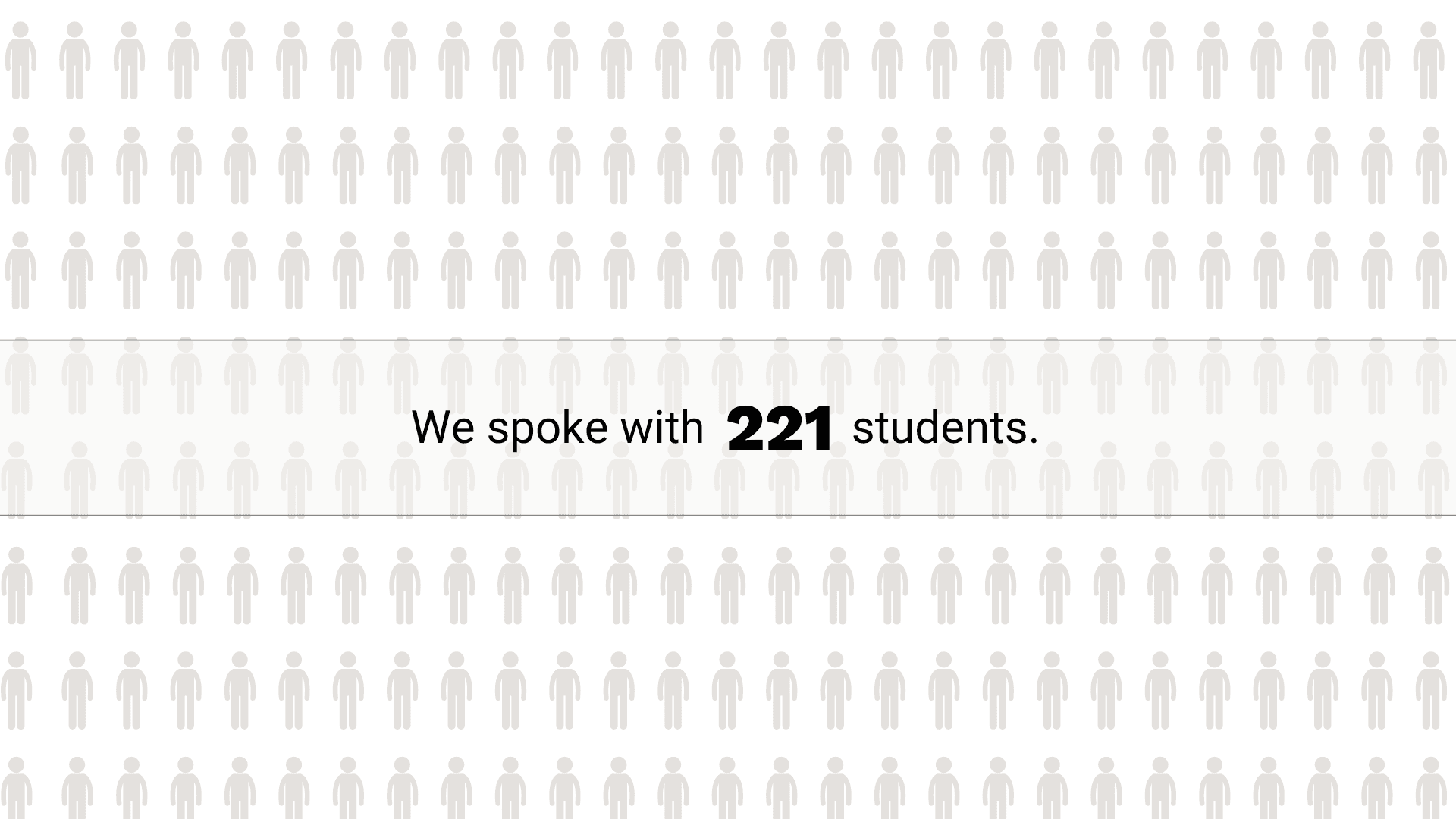
Survey students in both of Notre Dame’s dining halls through intercept-style interviews.
Conduct interviews at standard mealtimes, including breakfast, lunch, and dinner.
Convenience sample, goal N=10-30 each.
Record interviews using Voice Memos to be transcribed later.
Survey students in both of Notre Dame’s dining halls through intercept-style interviews.
Conduct interviews at standard mealtimes, including breakfast, lunch, and dinner.
Convenience sample, goal N=10-30 each.
Record interviews using Voice Memos to be transcribed later.
Survey students in both of Notre Dame’s dining halls through intercept-style interviews.
Conduct interviews at standard mealtimes, including breakfast, lunch, and dinner.
Convenience sample, goal N=10-30 each.
Record interviews using Voice Memos to be transcribed later.
Sample Questions
Sample Questions
Sample Questions
What did you have for [insert meal time]? Did you like it?
Do you typically eat all of your food? (if the plate is clear) OR Why are you choosing to leave some on your plate? // What stopped you from eating all of it?
Do you enjoy the dining hall generally?
What does sustainability mean to you? Do you think it’s important? Or just a passing thought?
Do you care? Are you aware?
What would make this better?
What would you want changed if the dining hall could alter anything to incentivize students to waste less food while it serves you?
NOTE: Questions were adapted in real-time.
What did you have for [insert meal time]? Did you like it?
Do you typically eat all of your food? (if the plate is clear) OR Why are you choosing to leave some on your plate? // What stopped you from eating all of it?
Do you enjoy the dining hall generally?
What does sustainability mean to you? Do you think it’s important? Or just a passing thought?
Do you care? Are you aware?
What would make this better?
What would you want changed if the dining hall could alter anything to incentivize students to waste less food while it serves you?
NOTE: Questions were adapted in real-time.
What did you have for [insert meal time]? Did you like it?
Do you typically eat all of your food? (if the plate is clear) OR Why are you choosing to leave some on your plate? // What stopped you from eating all of it?
Do you enjoy the dining hall generally?
What does sustainability mean to you? Do you think it’s important? Or just a passing thought?
Do you care? Are you aware?
What would make this better?
What would you want changed if the dining hall could alter anything to incentivize students to waste less food while it serves you?
NOTE: Questions were adapted in real-time.
Do you like the Dining Hall?
“I would like it if there were more options.”
“I’m a fan!” -- Luke
“I’d say one-third of the time.” -- Lucas
“It’s usually bearable.” -- Yara
“I thought it would be worse than it is.”
-- Caroline
“It all tastes the same.” -- Claire
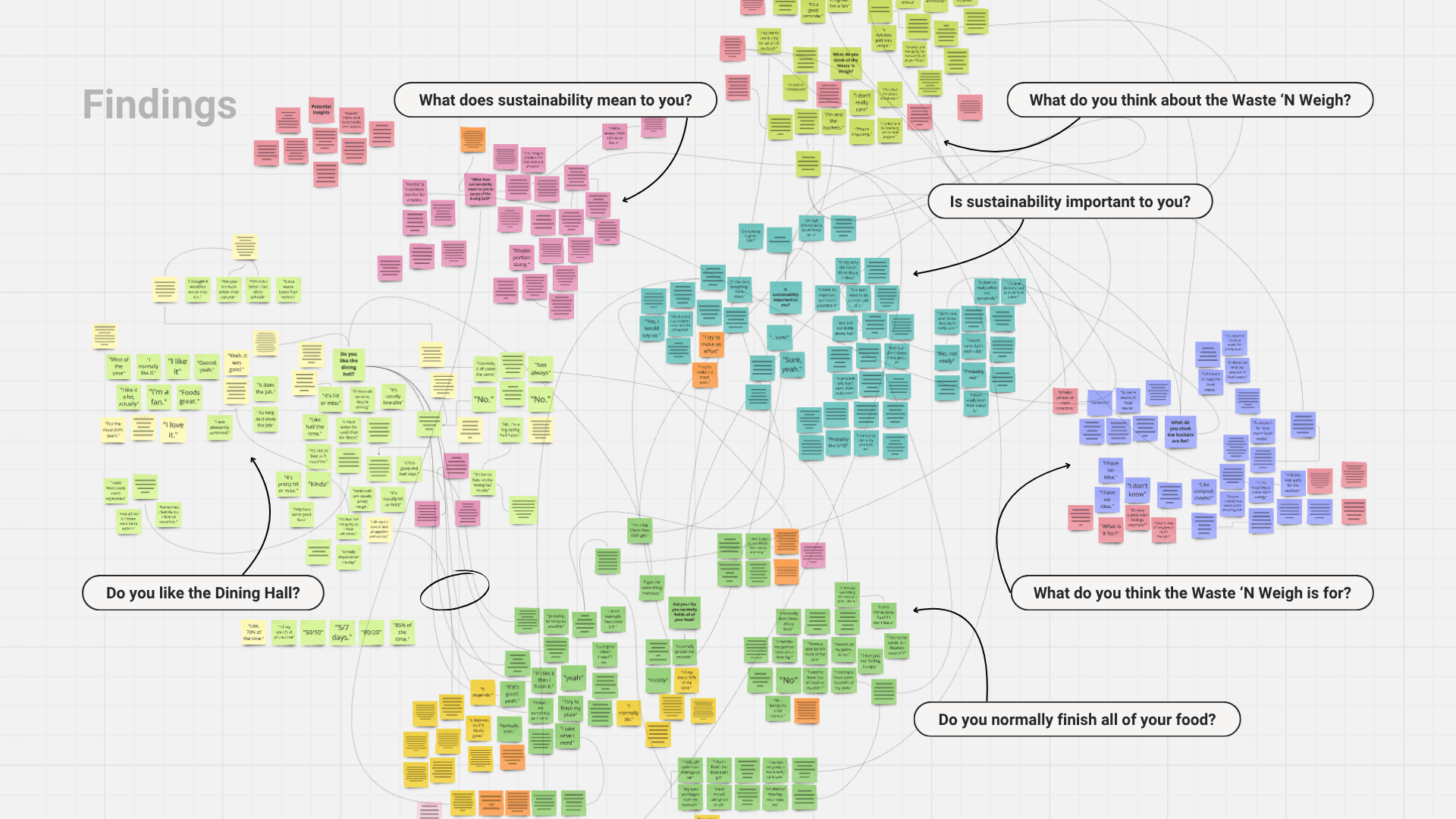
When students were asked if they liked the dining hall along with their meal, the general attitude was ambiguous.
Do you normally finish all your food?
“It depends on if it tastes good.” -- Owen
“If I like it, then I finish it.” -- Corinne
“My eyes are bigger than my stomach.” -- Dan
“Maybe I should portion my food better.” -- Nico
“I was raised to not waste my food.” -- Izzy
“My parents taught me to only take what I could finish, so I try to be careful.” -- Casey
Whether students finish their plate or not is dependent on taste, habits, and background.
“I try to limit my meat consumption.” -- Maddie
“Just trying to produce the least amount of waste.” -- Gianna
“I’m actually in a sustainability class right now, so I’m trying to produce as little food waste as possible.” -- Owen
“It’s not my number one priority, but if I can help it, I will.” -- Josie
Students are aware of what sustainability is and understand how to bring it into practice.
What does sustainability mean to you?
“I don’t really care about it that much, but yes, it’s important.” -- Elise
“It’s important within reason, but it’s not something I think about often.” -- Kate
“Yes, but not in the dining hall... I don’t care, and I know they don’t either.” -- Emma
“I just don’t know what difference one man could make.” -- Will
Despite agreement on the importance of sustainability, students admit to not caring about it personally.
Is sustainability important to you?
“So we know how much food we’re wasting.” -- Ian
“Do they publish their findings anywhere?” -- Kiki
“I have no idea.’ -- Sean
“To stop the food waste.” -- Ryan
“I think it uses the wasted food for something good like energy.” -- Kate
Students don’t know what the Waste ‘N Weigh is for.
What do you think the Waste ‘N Weigh is for?
“You mean the public humiliation?” -- Thomas
“I feel bad chucking out a full plate of food.” -- Sam
“I always get embarrassed.” -- Taylor
“It’s a little intimidating.” -- Drew
“I feel bad whenever I don’t finish my plate.” -- Brandon
While some students appreciate the Waste ‘N Weigh, the overall perception of it is negative.
What do you think of the Waste ‘N Weigh?
Key Takeaways
Key Takeaways
#1
#1
There is a disconnect between university efforts and students’ understanding of them.
There is a disconnect between university efforts and students’ understanding of them.
#2
#2
Students’ attitudes towards sustainability in the Dining Hall are generally apathetic.
Students’ attitudes towards sustainability in the Dining Hall are generally apathetic.
#3
#3
Students acknowledge sustainability’s importance but prioritize preference before environmental impact.
Students acknowledge sustainability’s importance but prioritize preference before environmental impact.
#4
#4
Cultural backgrounds play a significant role in students’ motivations surrounding sustainability.
Cultural backgrounds play a significant role in students’ motivations surrounding sustainability.
#5
#5
Students aren’t comfortable being honest about their actual opinions of sustainability on campus.
Students aren’t comfortable being honest about their actual opinions of sustainability on campus.
Key Takeaways
#1
There is a disconnect between university efforts and students’ understanding of them.
#2
Students’ attitudes towards sustainability in the Dining Hall are generally apathetic.
#3
Students acknowledge sustainability’s importance but prioritize preference before environmental impact.
#4
Cultural backgrounds play a significant role in students’ motivations surrounding sustainability.
#5
Students aren’t comfortable being honest about their actual opinions of sustainability on campus.
Design Opportunity #1
Design Opportunity #1
Design Opportunity #1
How might we communicate the University’s efforts involving sustainability so that students are aware of how the issue is being handled so that they may feel encouraged to engage with it?
How might we communicate the University’s efforts involving sustainability so that students are aware of how the issue is being handled so that they may feel encouraged to engage with it?
How might we communicate the University’s efforts involving sustainability so that students are aware of how the issue is being handled so that they may feel encouraged to engage with it?
#1
#1
There is a disconnect between university efforts and students’ understanding of them.
There is a disconnect between university efforts and students’ understanding of them.
There is a disconnect between university efforts and students’ understanding of them.
#2
#2
Students’ attitudes towards sustainability in the Dining Hall are generally apathetic.
Students’ attitudes towards sustainability in the Dining Hall are generally apathetic.
Students’ attitudes towards sustainability in the Dining Hall are generally apathetic.
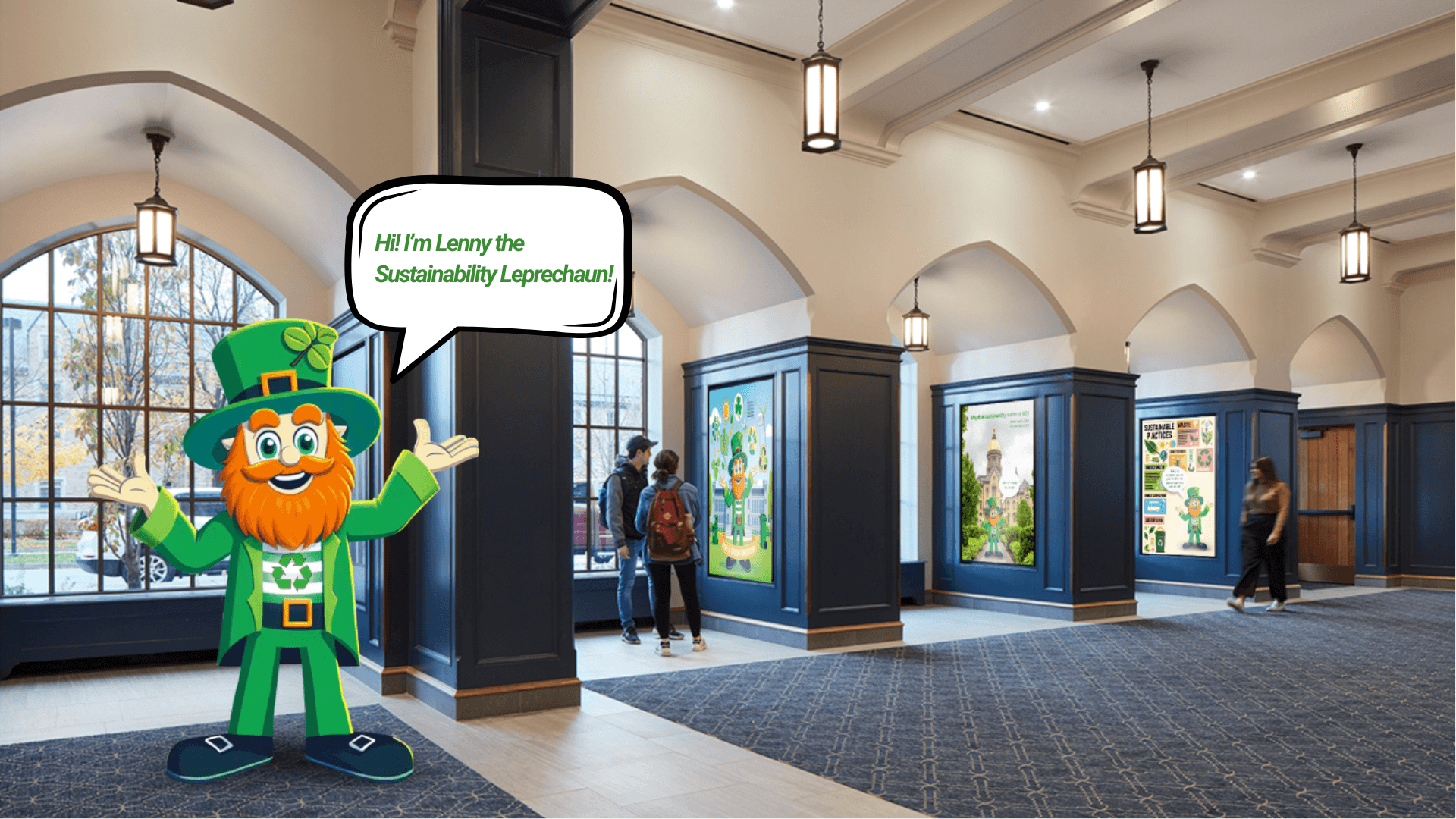
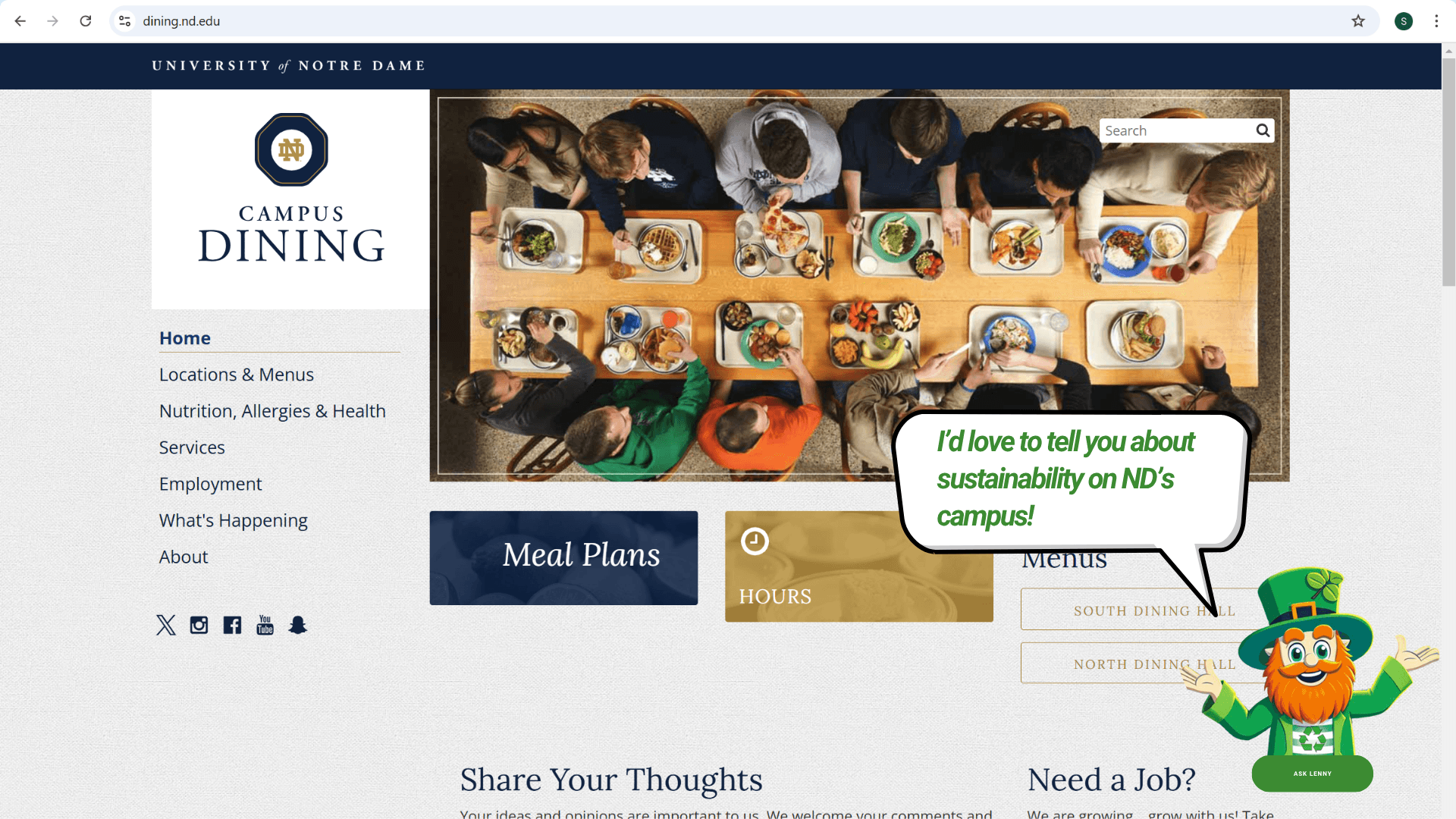
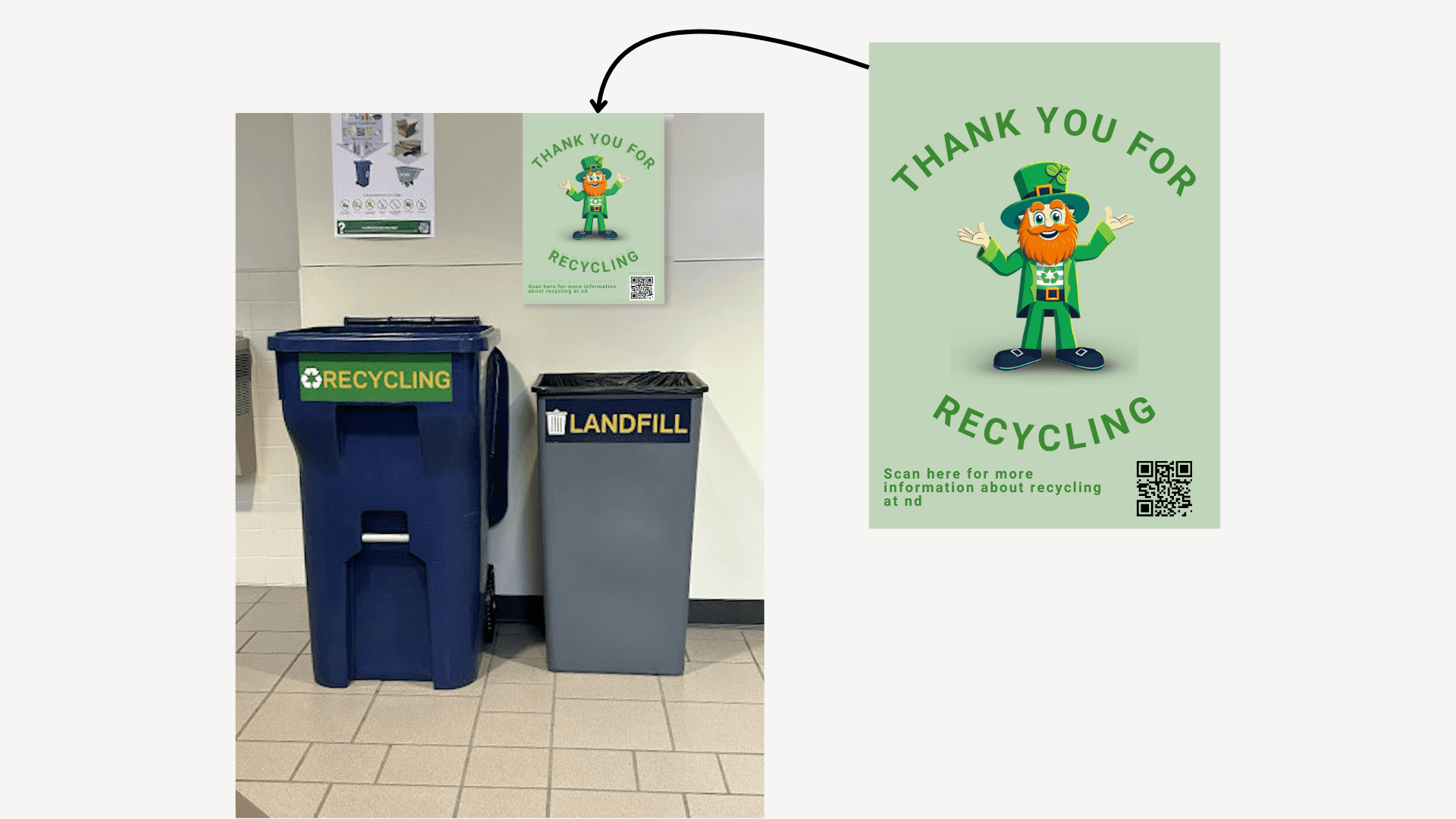
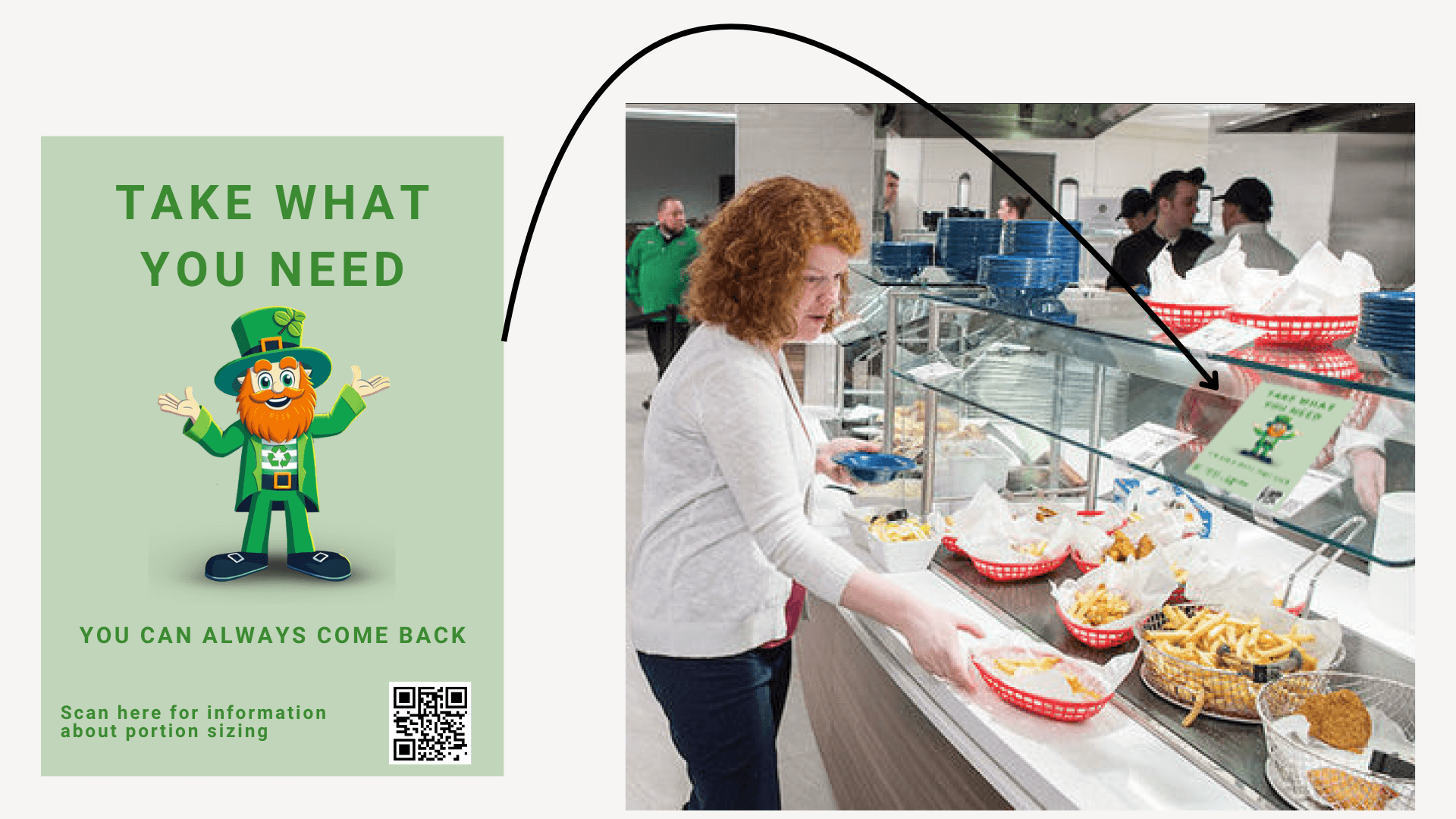
In Spring 2025, Notre Dame will introduce Lenny the Leprechaun. Lenny is intended to be the campus mascot for sustainability, and a way for students to connect with the issue. Lenny’s job is to educate students on University efforts towards sustainability, and make it fun along the way. During the Spring Semester, students can expect to see Lenny around campus and partnering with the Sustainability Office to hold events.
In Spring 2025, Notre Dame will introduce Lenny the Leprechaun. Lenny is intended to be the campus mascot for sustainability, and a way for students to connect with the issue. Lenny’s job is to educate students on University efforts towards sustainability, and make it fun along the way. During the Spring Semester, students can expect to see Lenny around campus and partnering with the Sustainability Office to hold events.
In Spring 2025, Notre Dame will introduce Lenny the Leprechaun. Lenny is intended to be the campus mascot for sustainability, and a way for students to connect with the issue. Lenny’s job is to educate students on University efforts towards sustainability, and make it fun along the way. During the Spring Semester, students can expect to see Lenny around campus and partnering with the Sustainability Office to hold events.
Design Opportunity #2
Design Opportunity #2
Design Opportunity #2
How might we re-imagine the Waste ‘N Weigh to be a more positive experience so that students don’t feel as embarrassed?
How might we re-imagine the Waste ‘N Weigh to be a more positive experience so that students don’t feel as embarrassed?
How might we re-imagine the Waste ‘N Weigh to be a more positive experience so that students don’t feel as embarrassed?
#3
#3
Students acknowledge sustainability’s importance but prioritize preference before environmental impact.
Students acknowledge sustainability’s importance but prioritize preference before environmental impact.
Students acknowledge sustainability’s importance but prioritize preference before environmental impact.
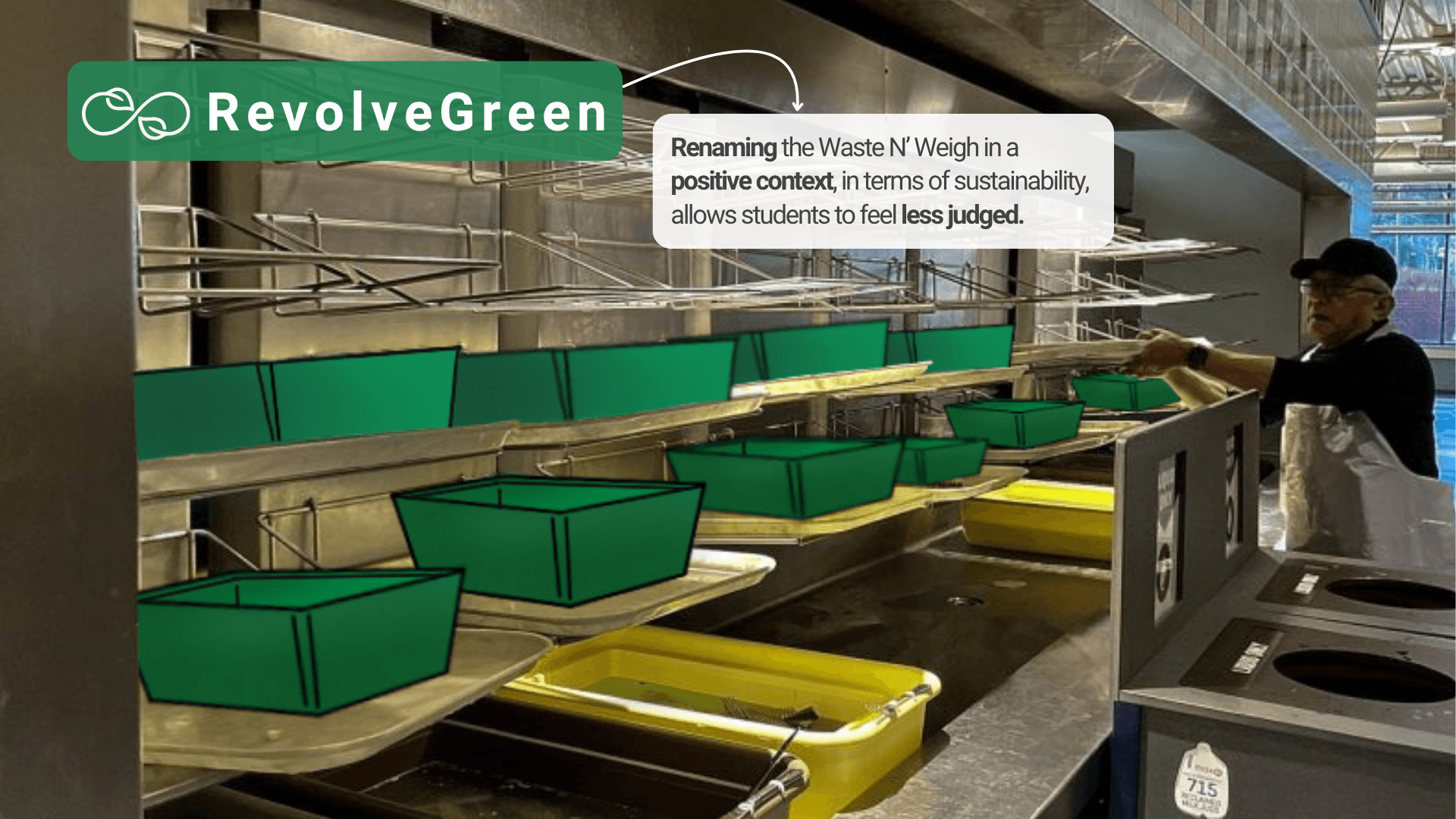
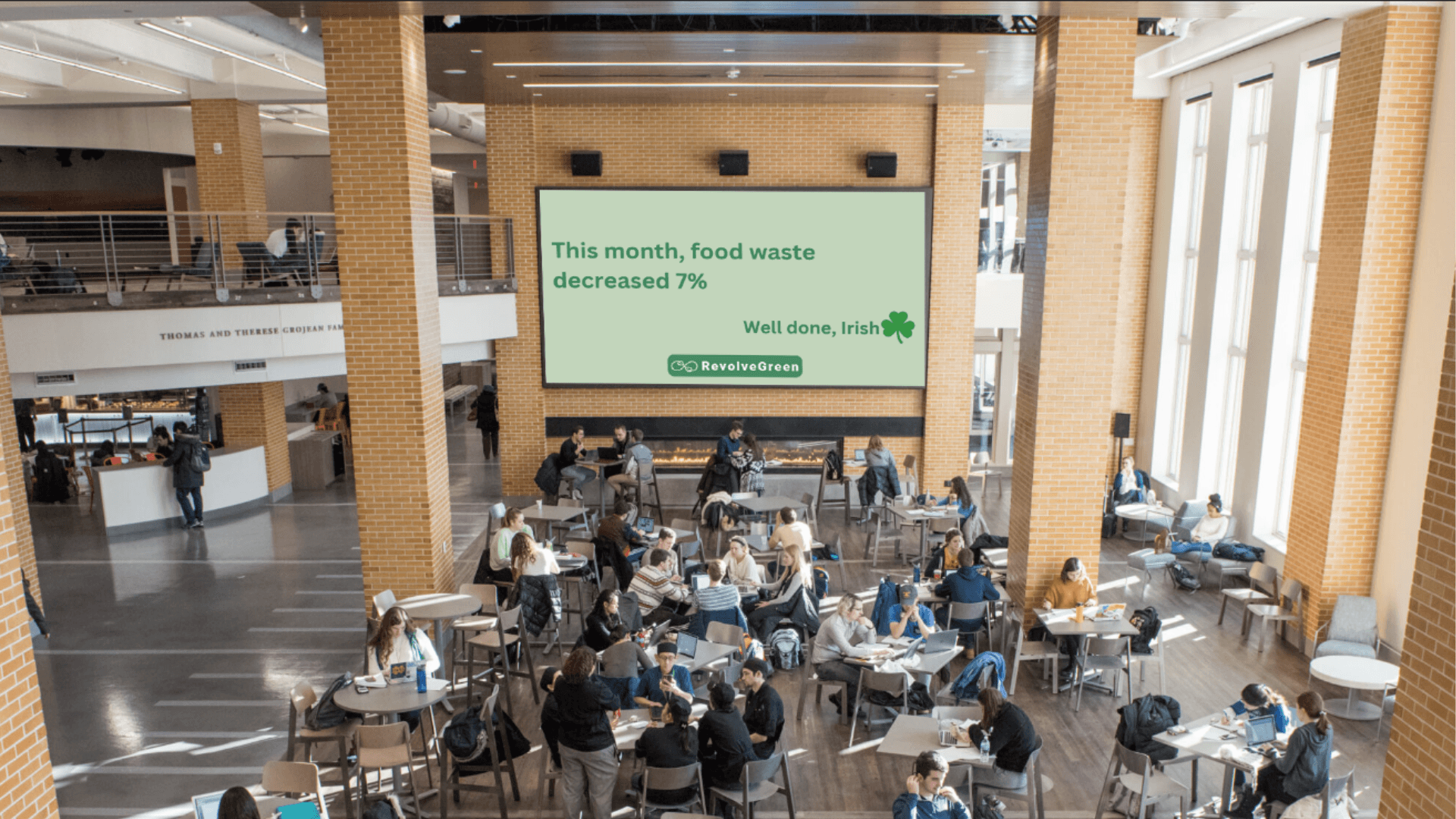
RevolveGreen is a system similar to the Waste ‘N Weigh where students scrape their leftover food into buckets and sort their dishes accordingly. What makes RevolveGreen unique is that the buckets are rotating on the Food Disposal Carousel so that the normal flow of traffic is maintained and students don’t feel like they’re being put on display.
RevolveGreen is a system similar to the Waste ‘N Weigh where students scrape their leftover food into buckets and sort their dishes accordingly. What makes RevolveGreen unique is that the buckets are rotating on the Food Disposal Carousel so that the normal flow of traffic is maintained and students don’t feel like they’re being put on display.
© 2025 - Sarah McArthur All Rights Reserved
© 2025 - Sarah McArthur All Rights Reserved
© 2025 - Sarah McArthur All Rights Reserved
Do you like the Dining Hall?
“I would like it if there were more options.”
“I’m a fan!” -- Luke
“I’d say one-third of the time.” -- Lucas
“It’s usually bearable.” -- Yara
“I thought it would be worse than it is.” -- Caroline
“It all tastes the same.” -- Claire
When students were asked if they liked the dining hall along with their meal, the general attitude was ambiguous.